HSA vs. FSA vs. HRA: Health Accounts Explained
HSA, FSA and HRA explained: who can use each account, who contributes, rollover rules and how to pay medical bills with tax-free money.
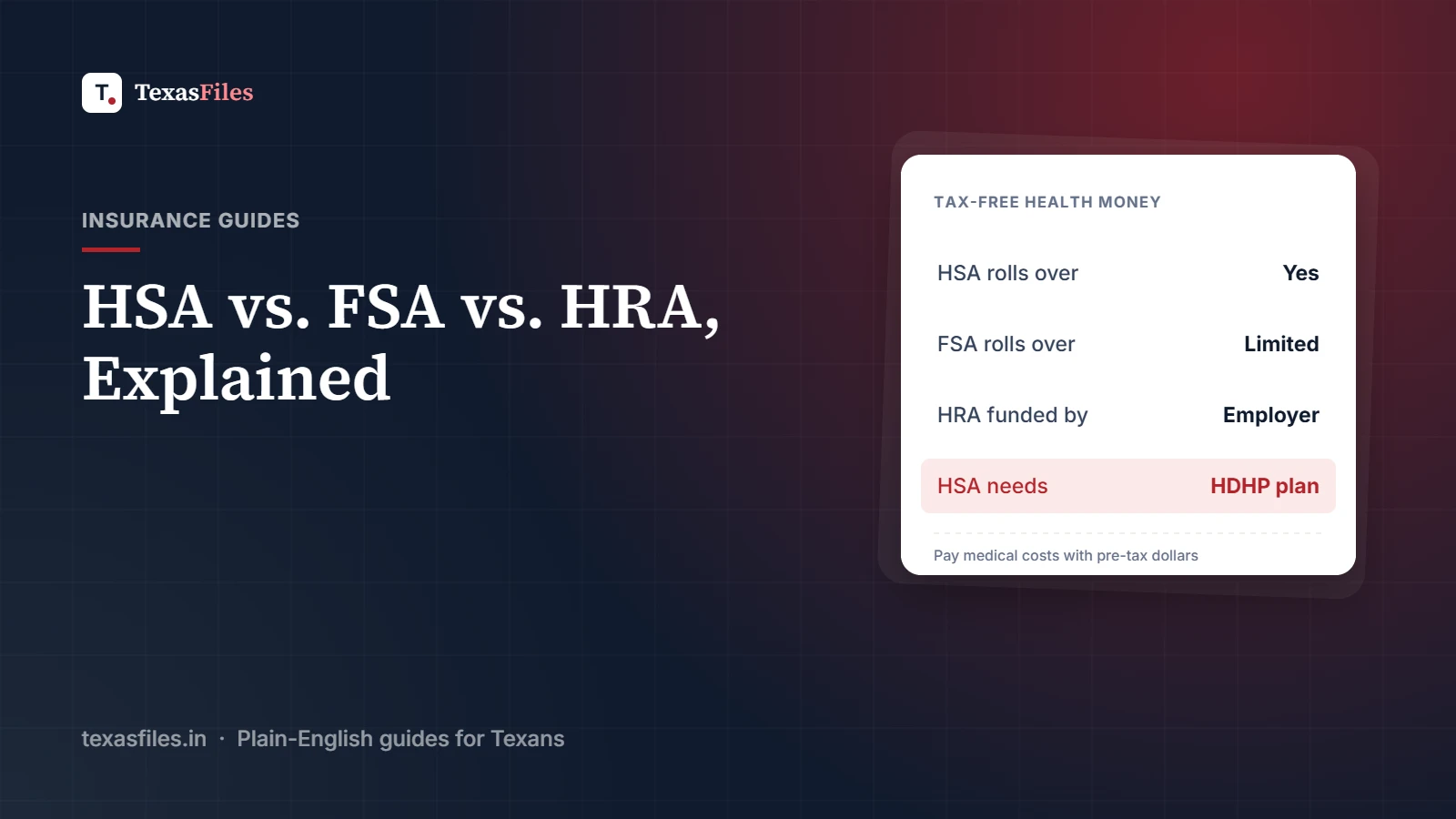
HSAs, FSAs, and HRAs all help you pay medical costs with tax-free money, but they work very differently. Mixing them up can mean losing money at the end of the year or missing out on one of the best tax breaks available. This guide explains how each account works, who can use it, and how to get the most from it.
HSA: Health Savings Account
An HSA is a savings account you own, used for qualified medical expenses. It's only available if you're enrolled in an HSA-eligible high-deductible health plan (HDHP).
Who can open one: Anyone covered by an HSA-eligible plan who has no disqualifying coverage, isn't enrolled in Medicare, and can't be claimed as a dependent on someone else's tax return.
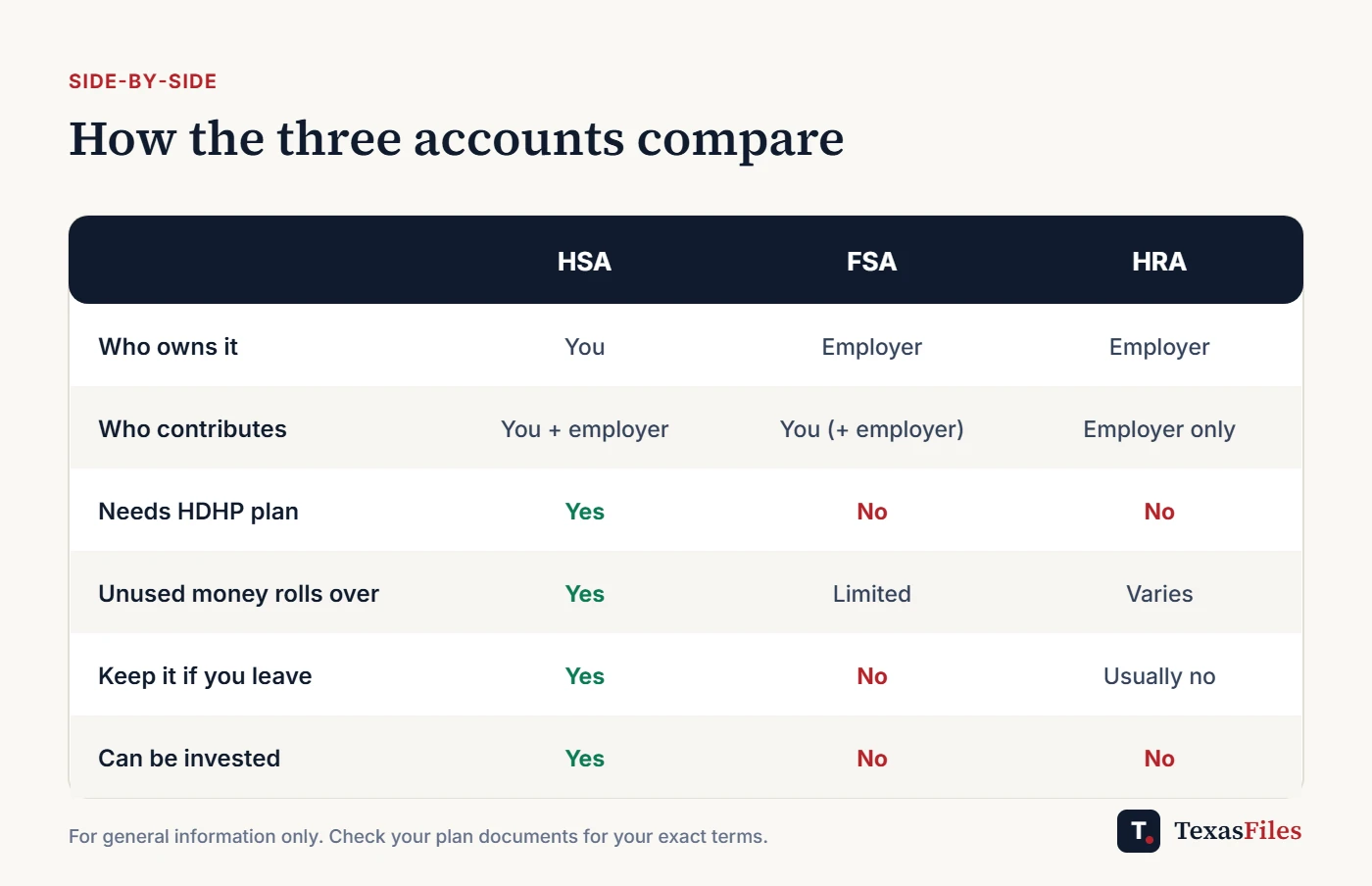
Who contributes: You, your employer, or both.
Triple tax advantage: Contributions are tax-deductible or pre-tax, growth is tax-free, and withdrawals for qualified medical expenses are tax-free.
It rolls over: Unused money stays in your account year after year. There's no "use it or lose it."
It's portable: The account is yours, even if you change jobs or plans.
You can invest it: Many HSA providers let you invest your balance in funds, so it can grow over time.
After age 65, you can withdraw HSA money for any purpose without a penalty, though non-medical withdrawals are taxed as income. For that reason, some people use an HSA as a second retirement account.
FSA: Flexible Spending Account
A health FSA is an employer-sponsored account that lets you set aside pre-tax money from your paycheck for medical expenses.
Who can use one: Employees whose employer offers it. You don't need a high-deductible plan.
Full amount available on day one: You can use your full annual election at the start of the plan year, even before it's been deducted from your paychecks.
Use it or lose it: Generally, unspent money is forfeited at the end of the year. Some employers offer a short grace period or let you carry over a limited amount.
Not portable: If you leave your job, you usually lose access to the account, unless you continue it through COBRA.
HRA: Health Reimbursement Arrangement
An HRA is funded entirely by your employer, which reimburses you for qualified medical expenses up to a set amount.
Who contributes: Only the employer. You can't add your own money.
Rollover: Up to the employer. Some HRAs roll over; others don't.
Portability: Usually stays with the employer when you leave.
Variations: Some small businesses use an ICHRA or QSEHRA to reimburse employees for individual health insurance premiums.
What Counts as a Qualified Medical Expense?
Common eligible expenses include:
Deductibles, copays, and coinsurance
Prescription drugs
Dental care, including cleanings, fillings, and orthodontia
Vision care, including glasses and contact lenses
Many over-the-counter medications and menstrual care products
Medical equipment, such as crutches, blood pressure monitors, and hearing aids
Cosmetic procedures, gym memberships, and general wellness purchases usually don't qualify. The IRS publishes the official list, and your account administrator can confirm specific items.
Contribution Limits
The IRS sets new contribution limits for HSAs and FSAs every year and adjusts them for inflation. HSAs have separate limits for individual and family coverage, plus an extra "catch-up" contribution allowed at age 55 and older. Check the current year's limits with your employer or account provider before choosing how much to contribute.
Can You Have More Than One?
HSA and a general FSA: Generally no. A standard health FSA disqualifies you from HSA contributions.
HSA and a limited-purpose FSA: Yes. A limited-purpose FSA covers only dental and vision expenses.
HRA and FSA: Often yes, depending on how your employer sets them up.
Tips to Get the Most Value
With an HSA: Contribute as much as you can afford, capture any employer match, and keep receipts. You can reimburse yourself years later for past qualified expenses.
With an FSA: Estimate carefully. Base your election on predictable costs like prescriptions, glasses, and planned dental work.
Keep records: Save receipts and Explanations of Benefits in case you need to prove an expense was eligible.
Frequently Asked Questions
What happens to my HSA if I change insurance?
You keep it and can still spend the money on qualified expenses. You just can't make new contributions unless you're enrolled in an HSA-eligible plan.
What happens to my FSA if I quit?
You typically lose any unspent balance, unless you continue coverage through COBRA. Try to use the funds before your last day.
Can I use an HSA for my spouse or children?
Yes, for qualified medical expenses of your spouse and tax dependents, even if they aren't on your health plan.
The Bottom Line
An HSA is the most powerful and flexible option, but it requires a high-deductible plan. An FSA offers immediate tax savings but has use-it-or-lose-it rules. An HRA is free money from your employer. Understanding which ones you can use helps you pay for care with pre-tax dollars and keep more of your paycheck.
Keep reading
How to Choose a Health Insurance Plan: Compare the Total Cost, Not the Premium
The cheapest premium isn't always the cheapest plan. Learn how to compare health plans by total yearly cost, networks and drug coverage.
·3 min read
COBRA vs. Marketplace Insurance After a Job Loss in Texas
Lost your job? Compare COBRA and a HealthCare.gov Marketplace plan: costs, deadlines, networks and when each option makes sense for Texans.
·4 min read
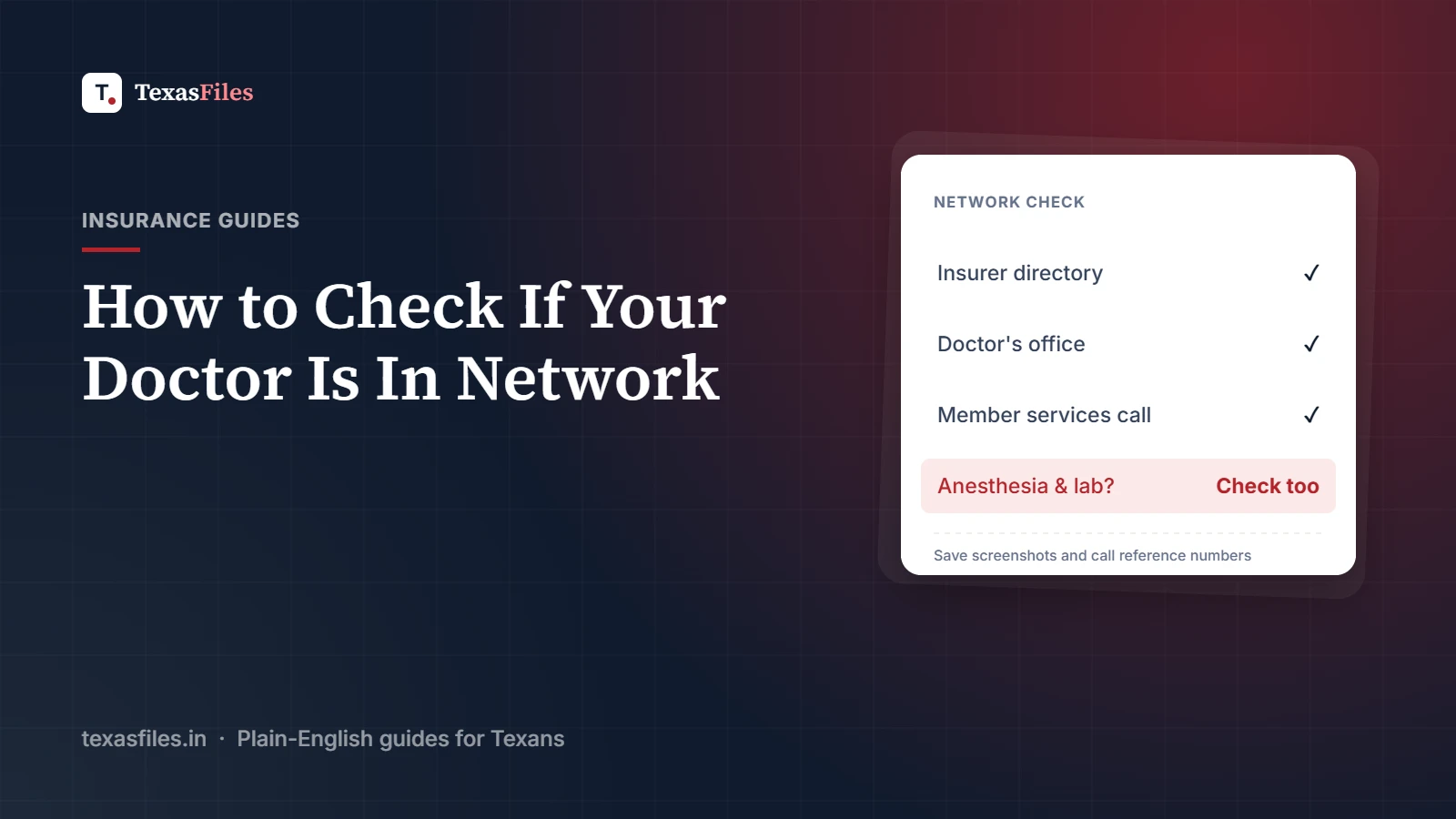
How to Check If a Doctor Is In Network (and Avoid Surprise Bills)
Provider directories are often wrong. Use this three-step check to confirm a doctor, hospital or lab is in your network before you book.
·3 min read