How to Choose a Health Insurance Plan: Compare the Total Cost, Not the Premium
The cheapest premium isn't always the cheapest plan. Learn how to compare health plans by total yearly cost, networks and drug coverage.
Most people choose a health insurance plan by looking at one number: the monthly premium. It's an understandable shortcut, but it's often the wrong one. The cheapest premium can turn into the most expensive plan the moment you need real medical care, and a plan with a higher premium can save you thousands.
This step-by-step guide shows you how to compare plans based on what you'll actually pay over a full year.
Step 1: List What You Need From a Plan
Before comparing plans, write down:
Your doctors: Primary care, specialists, and any therapist or counselor you see regularly
Your hospitals: The one you'd want for surgery or an emergency
Your prescriptions: Every medication, with the dose
Expected care: Planned surgeries, a pregnancy, ongoing therapy, or a chronic condition you manage
Your budget: What you can comfortably pay each month, and what you could handle in a bad year
Step 2: Check the Network and Drug List First
A plan that doesn't include your doctors or cover your medications is rarely a bargain. For each plan you're considering, search the provider directory for your doctors and hospital, and search the formulary (drug list) for your prescriptions. Note each drug's tier, since that determines your cost. For a thorough check, see our guide on how to check if a doctor is in network.
Also consider the plan type. HMOs and EPOs generally cost less but don't cover out-of-network care. Our guide to HMO vs. PPO vs. EPO vs. POS plans explains the trade-offs.
Step 3: Calculate Your Total Yearly Cost
For each plan that passes Step 2, estimate three scenarios:
Low-use year: Annual premiums, plus a few office visit copays and your regular prescriptions.
Expected year: Annual premiums, plus your realistic estimate of visits, prescriptions, tests, and any planned care.
Worst-case year: Annual premiums, plus the plan's full out-of-pocket maximum.
A Side-by-Side Example
Compare two plans for one person:
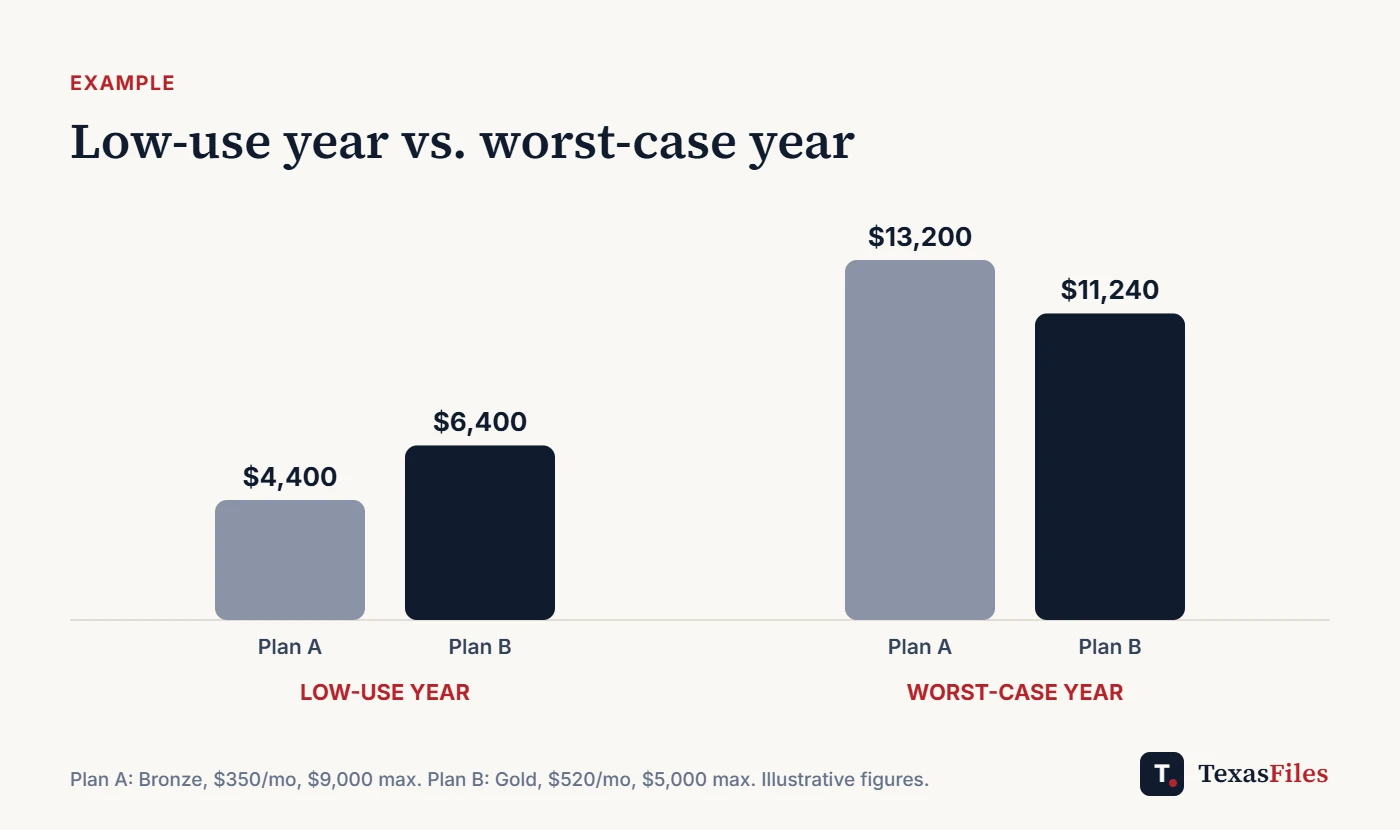
Plan A (Bronze): $350/month premium, $7,500 deductible, $9,000 out-of-pocket maximum
Plan B (Gold): $520/month premium, $1,500 deductible, $5,000 out-of-pocket maximum
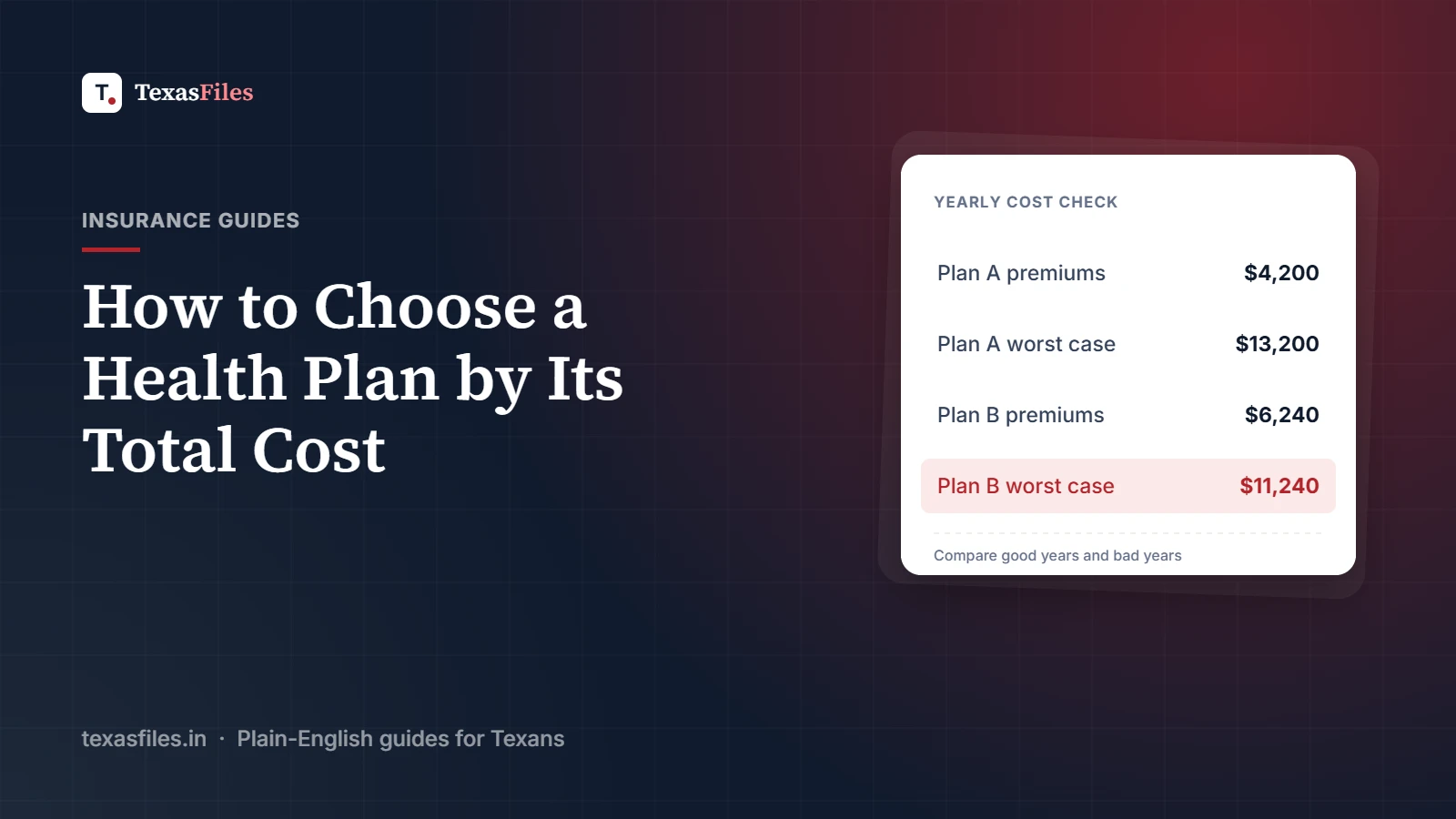
Annual premiums are $4,200 for Plan A and $6,240 for Plan B.
Low-use year: Plan A costs about $4,400 and Plan B about $6,400. Plan A wins by roughly $2,000.
Worst-case year: Plan A costs $13,200 and Plan B costs $11,240. Plan B wins by nearly $2,000.
If you're healthy and have savings to cover a bad year, Plan A may be the smarter bet. If you have a chronic condition, a planned surgery, or little savings, Plan B offers much better protection.
Step 4: Understand the Metal Tiers
Marketplace plans are grouped into metal levels based on how costs are split between you and the plan on average:
Bronze: Lowest premiums, highest costs when you get care
Silver: Moderate premiums and costs. If your income qualifies you for cost-sharing reductions, those extra savings are available only on Silver plans, which can make Silver the best value.
Gold: Higher premiums, lower costs when you get care
Platinum: Highest premiums, lowest costs. Not widely available in Texas.
Step 5: Look Beyond the Numbers
Is the plan HSA-eligible? A high-deductible plan paired with a Health Savings Account can offer tax advantages. See our guide to HSAs, FSAs, and HRAs.
What are the prior authorization rules? Some plans require approval for many services.
What's the insurer's reputation? Look at customer service ratings and complaint data. The Texas Department of Insurance publishes complaint information for insurers.
Are there extras? Telehealth, wellness programs, or free virtual primary care can add value.
Frequently Asked Questions
Is the cheapest plan ever the right choice?
Yes, if you rarely use care, your doctors are in network, and you could afford the out-of-pocket maximum if something happened.
Should I choose a plan with a low deductible?
If you expect significant medical costs, a lower deductible usually saves money overall. If you rarely see a doctor, you may be paying extra premiums for protection you don't use.
Where can I compare Marketplace plans?
Texas uses HealthCare.gov. Its plan comparison tool shows estimated yearly costs and lets you filter by doctors and drugs.
The Bottom Line
The best health plan isn't the one with the lowest premium. It's the one that covers your doctors and medications and gives you the lowest total cost across the range of years you might realistically have.
Keep reading
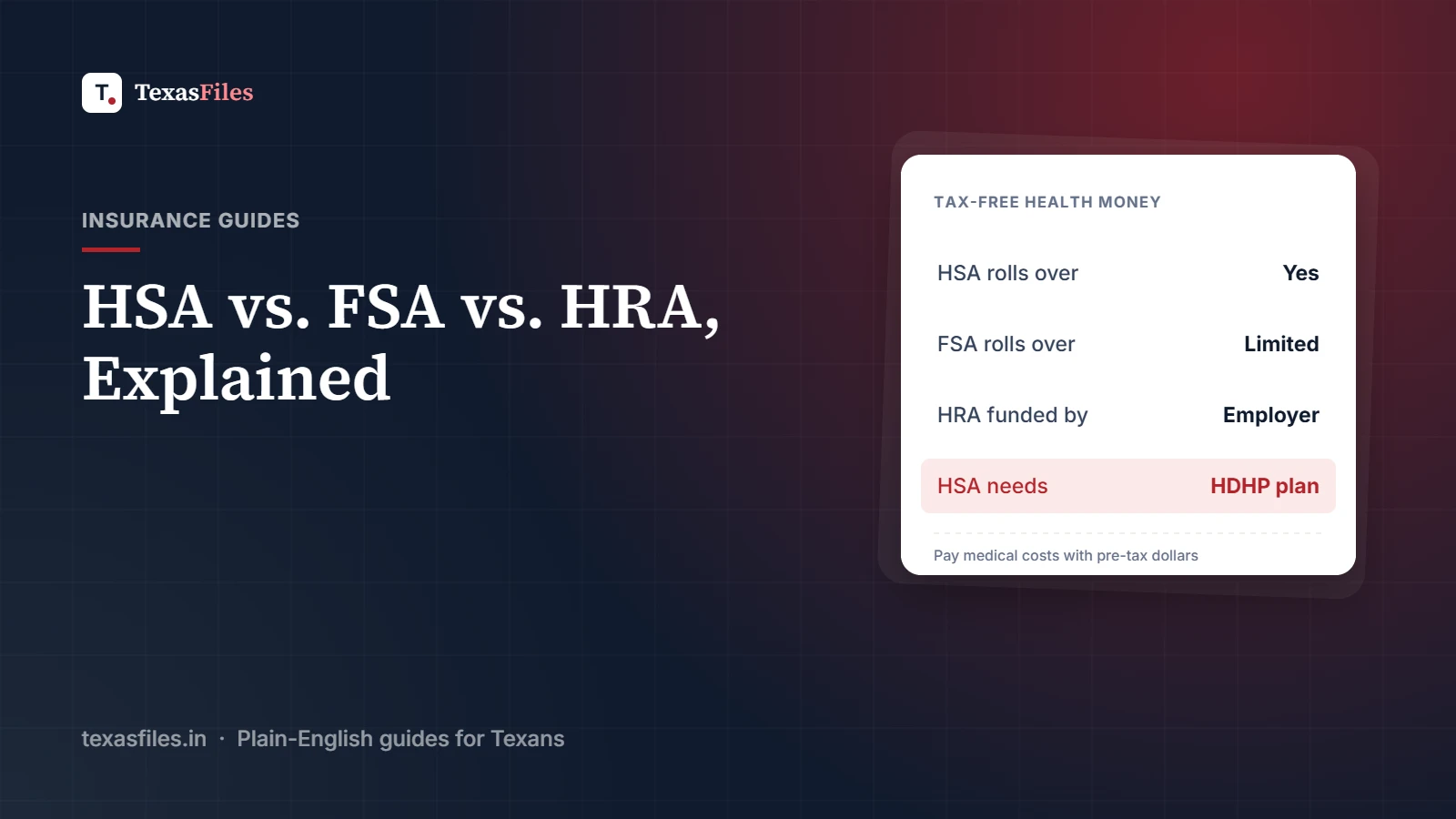
HSA vs. FSA vs. HRA: Health Accounts Explained
HSA, FSA and HRA explained: who can use each account, who contributes, rollover rules and how to pay medical bills with tax-free money.
·4 min read
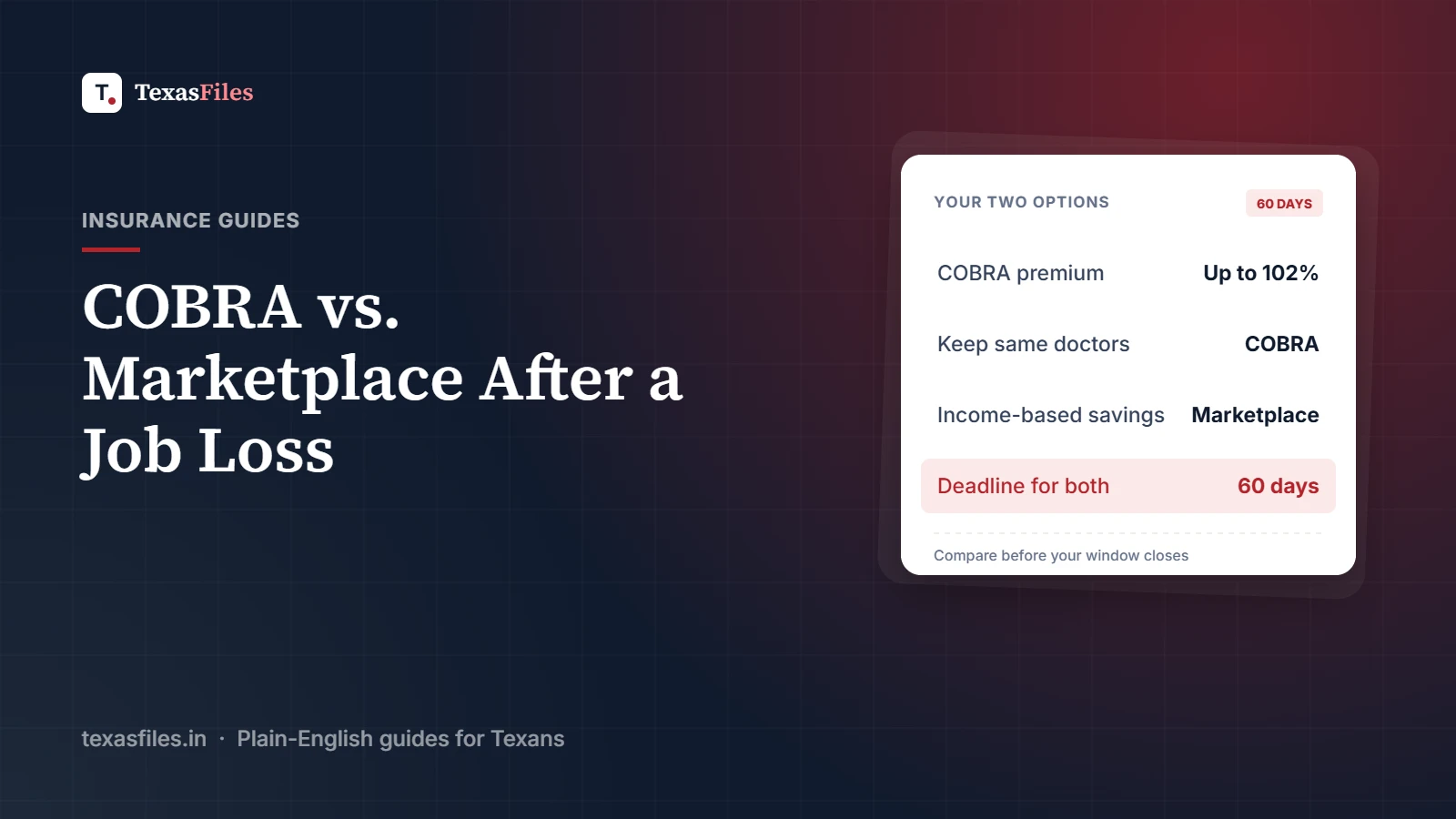
COBRA vs. Marketplace Insurance After a Job Loss in Texas
Lost your job? Compare COBRA and a HealthCare.gov Marketplace plan: costs, deadlines, networks and when each option makes sense for Texans.
·4 min read

How to Check If a Doctor Is In Network (and Avoid Surprise Bills)
Provider directories are often wrong. Use this three-step check to confirm a doctor, hospital or lab is in your network before you book.
·3 min read