CLIA Certificates and Modifier QW: Billing Waived Lab Tests
CLIA certificate types, where the CLIA number goes on the CMS-1500 and 837P, and when Medicare requires modifier QW for waived lab tests.
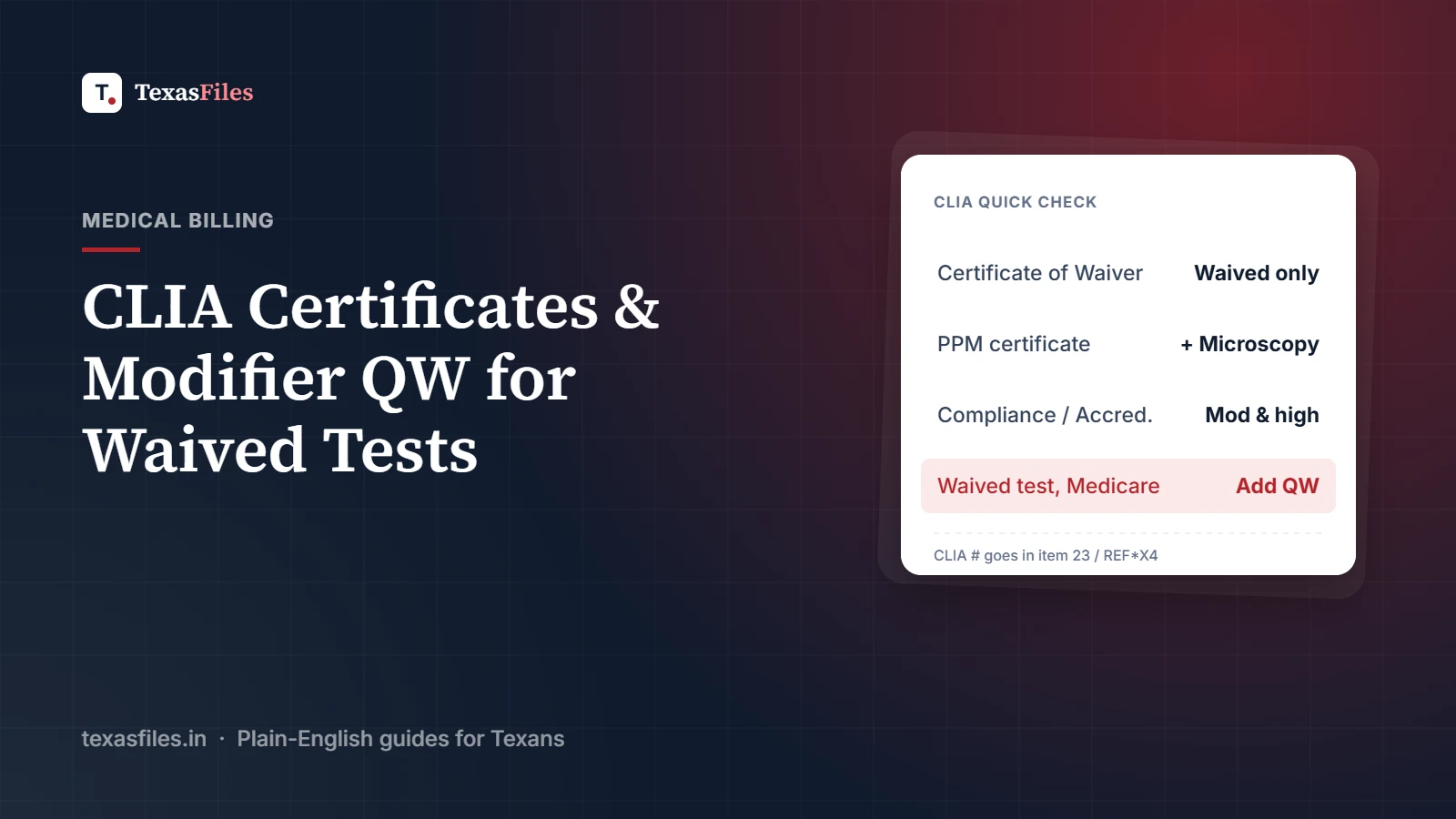
If your practice runs even simple in-office tests, such as a rapid strep, urine dipstick, or fingerstick glucose, you're operating a laboratory in the eyes of federal law. That means you need a CLIA certificate, and when you bill Medicare for many of those simple tests, you need the QW modifier. Getting either one wrong is one of the fastest ways to generate lab denials.
This guide explains CLIA certificate types, how to report the CLIA number on claims, and when to use modifier QW.
What Is CLIA?
The Clinical Laboratory Improvement Amendments (CLIA) are federal standards that apply to any facility that tests human specimens for diagnosis, prevention, or treatment. CMS administers the program, and in Texas, state survey agencies carry out inspections on CMS's behalf. Every testing site needs a CLIA certificate that matches the complexity of the tests it performs.
Test Complexity Levels
Waived tests: Simple tests with a low risk of an incorrect result, such as many rapid strep, flu, pregnancy, and urine dipstick tests. The FDA determines which tests are waived.
Moderate complexity: Includes provider-performed microscopy (PPM) procedures and many automated tests.
High complexity: Tests that require more expertise and stricter quality standards.
Types of CLIA Certificates
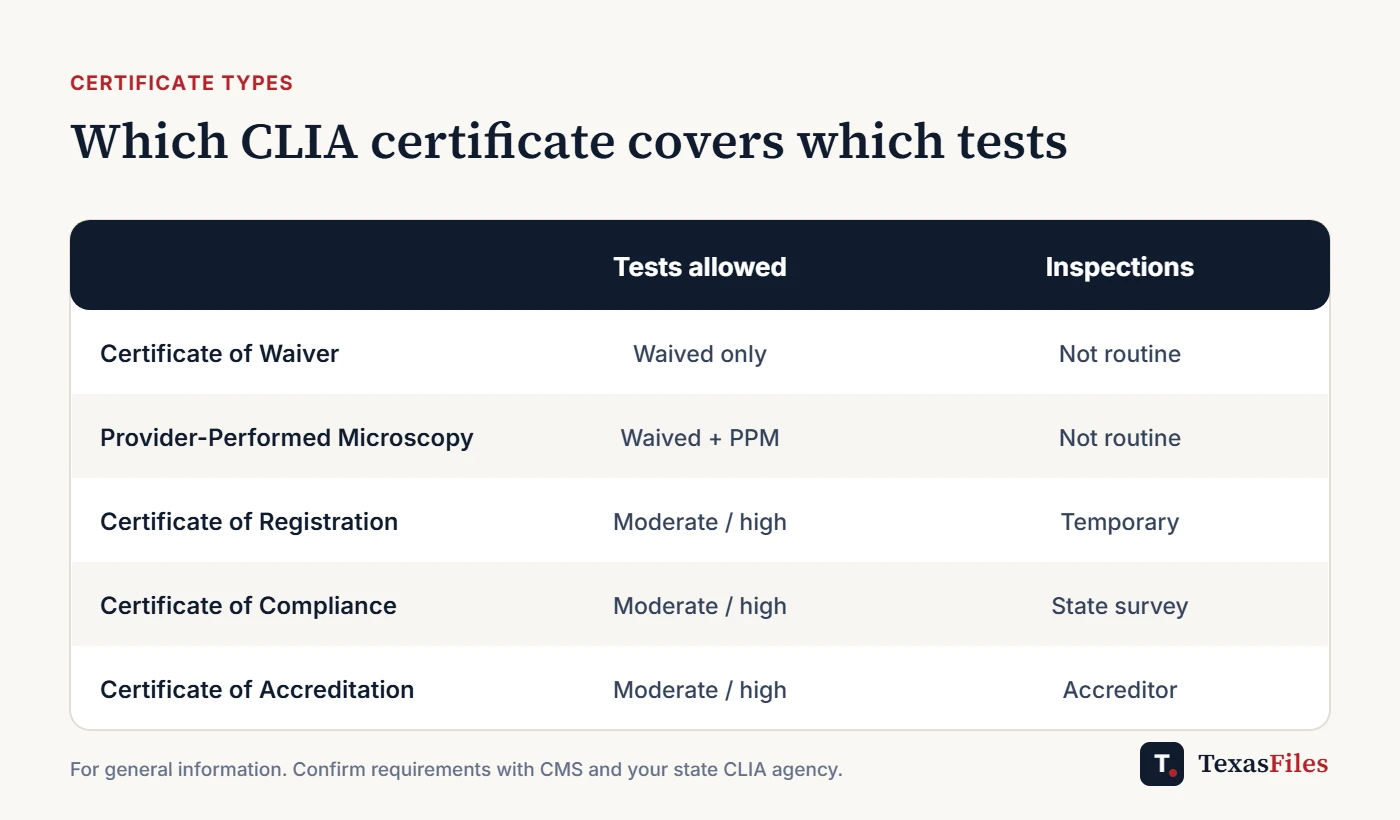
Certificate of Waiver: Allows only waived tests. This is the most common certificate for physician offices.
Certificate for Provider-Performed Microscopy (PPM): Allows waived tests plus specific microscopy procedures performed by a physician or certain other practitioners during a visit.
Certificate of Registration: A temporary certificate that lets a new lab perform moderate- or high-complexity testing until it passes its initial survey.
Certificate of Compliance: Issued after a lab passes a state survey for moderate- or high-complexity testing.
Certificate of Accreditation: Issued to labs accredited by a CMS-approved organization, such as CAP or COLA.
Billing a test above your certificate's level, such as a moderate-complexity test under a Certificate of Waiver, results in denials and can raise compliance concerns.
How to Report the CLIA Number on Claims
Paper CMS-1500: Enter the 10-character CLIA number in item 23.
Electronic 837P: Report it in a REF segment with qualifier X4, at the claim level in loop 2300. If different lines were performed under different CLIA numbers, report them at the line level in loop 2400.
Referring to an outside lab: When billing is allowed for tests performed by a reference lab, that lab's CLIA number is reported in its own segment, along with the lab's information.
Store the CLIA number at the location level in your practice management system so it populates automatically, and set a reminder before the certificate's expiration date. A lapsed certificate means every lab line can deny.
What Is Modifier QW?
Modifier QW identifies a CLIA-waived test. Medicare requires it on most waived tests billed by a lab with a Certificate of Waiver, so the claims system can confirm the test matches the certificate. Without QW, the claim line is typically rejected or denied.
When to use it: On the CPT or HCPCS code for a test the FDA has categorized as waived, when the CMS list of waived tests shows the code requires QW.
When not to use it: A small number of waived test codes are exempt from the QW requirement. Check the current CMS waived-test list, which is updated regularly as new tests are approved.
Labs with higher-level certificates: Labs with compliance or accreditation certificates can generally perform waived tests too. Follow your payer's and Medicare contractor's instructions on whether QW is needed.
Commercial payers: Some follow Medicare's QW rules and some don't. Check each payer's lab billing policy.
Common CLIA and QW Billing Errors
CLIA number missing from the claim or entered in the wrong field
Expired or terminated CLIA certificate
CLIA number belongs to a different location than where the test was done
Moderate- or high-complexity tests billed under a Certificate of Waiver
QW missing on waived tests
QW added to tests that aren't waived
Test kit not on the FDA's waived list, even though a similar kit is
For a broader look at lab denial causes, see our guide to common lab billing denials.
Best Practices
Keep a test menu: List every test your practice performs with its CPT code, complexity level, kit name, and whether QW is required.
Verify new tests before you start billing: Confirm a new kit is on the FDA waived list before adding it to your menu.
Set up claim edits: Flag lab claims without a CLIA number and waived codes without QW.
Track renewals: CLIA certificates are generally renewed every two years. Watch for CMS renewal notices and fees.
Update after changes: If your practice moves, changes ownership, or changes lab directors, update your CLIA certificate promptly.
Frequently Asked Questions
Does a physician office need a CLIA certificate for a urine dipstick?
Yes. Even waived tests require at least a Certificate of Waiver.
Where does the CLIA number go on the claim?
Item 23 on the CMS-1500, or a REF X4 segment on the 837P electronic claim.
Is QW required by commercial insurance?
It depends on the payer. Many follow Medicare, but always check the payer's lab policy.
What happens if our CLIA certificate expires?
Lab claims for dates of service after the expiration may be denied, and testing without a valid certificate is a compliance problem. Renew before the expiration date.
The Bottom Line
Match every test to your CLIA certificate level, report the CLIA number correctly on every lab claim, and append QW to waived tests when required. These simple controls prevent a large share of avoidable lab denials.
Keep reading
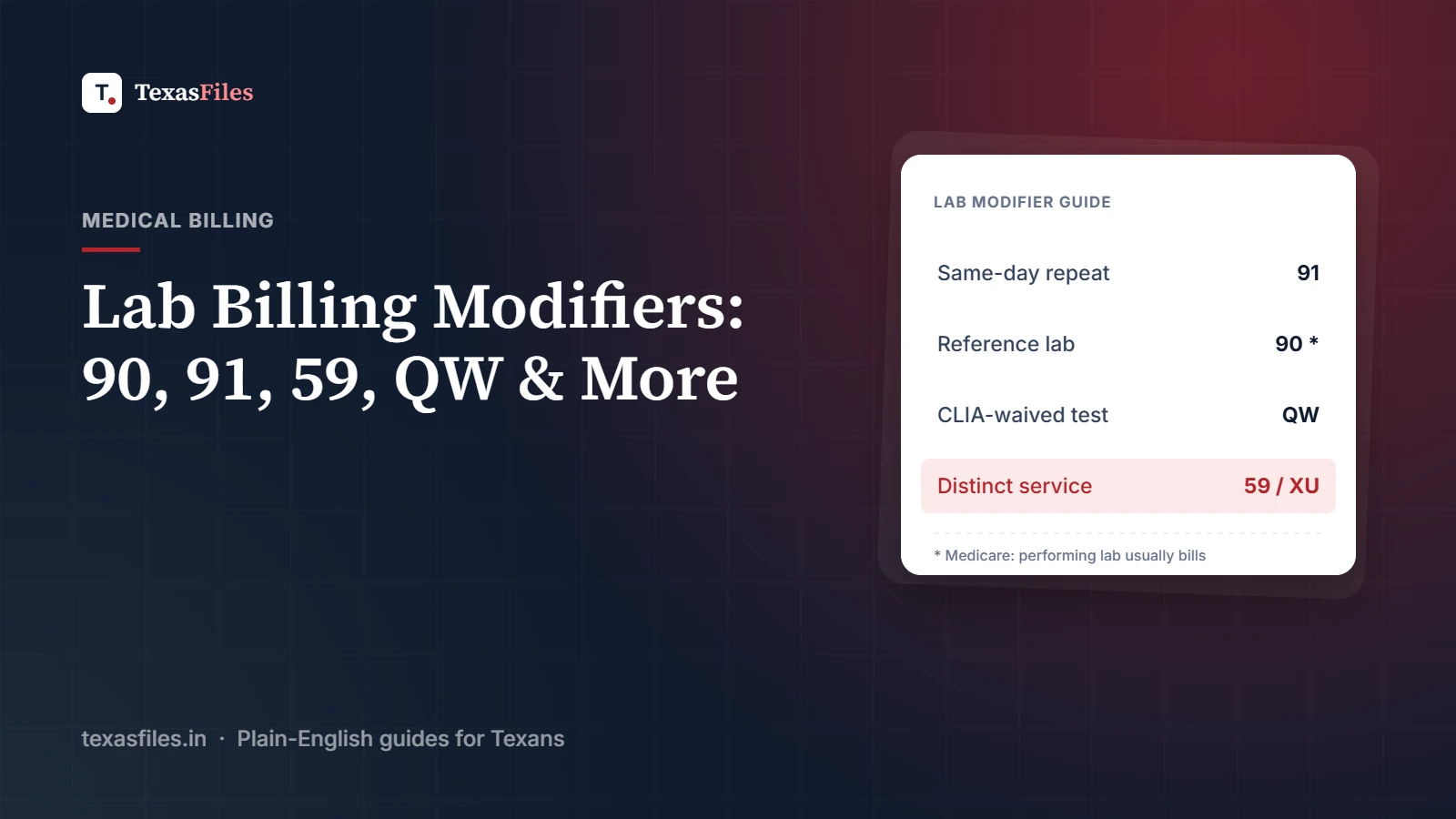
Lab Billing Modifiers Explained: 90, 91, 59, QW, and More
When to use lab modifiers 91, 90, QW, 59 and the X modifiers, 26 and TC, and ABN modifiers, plus the common mistakes that cause duplicate and bundling denials.
·4 min read
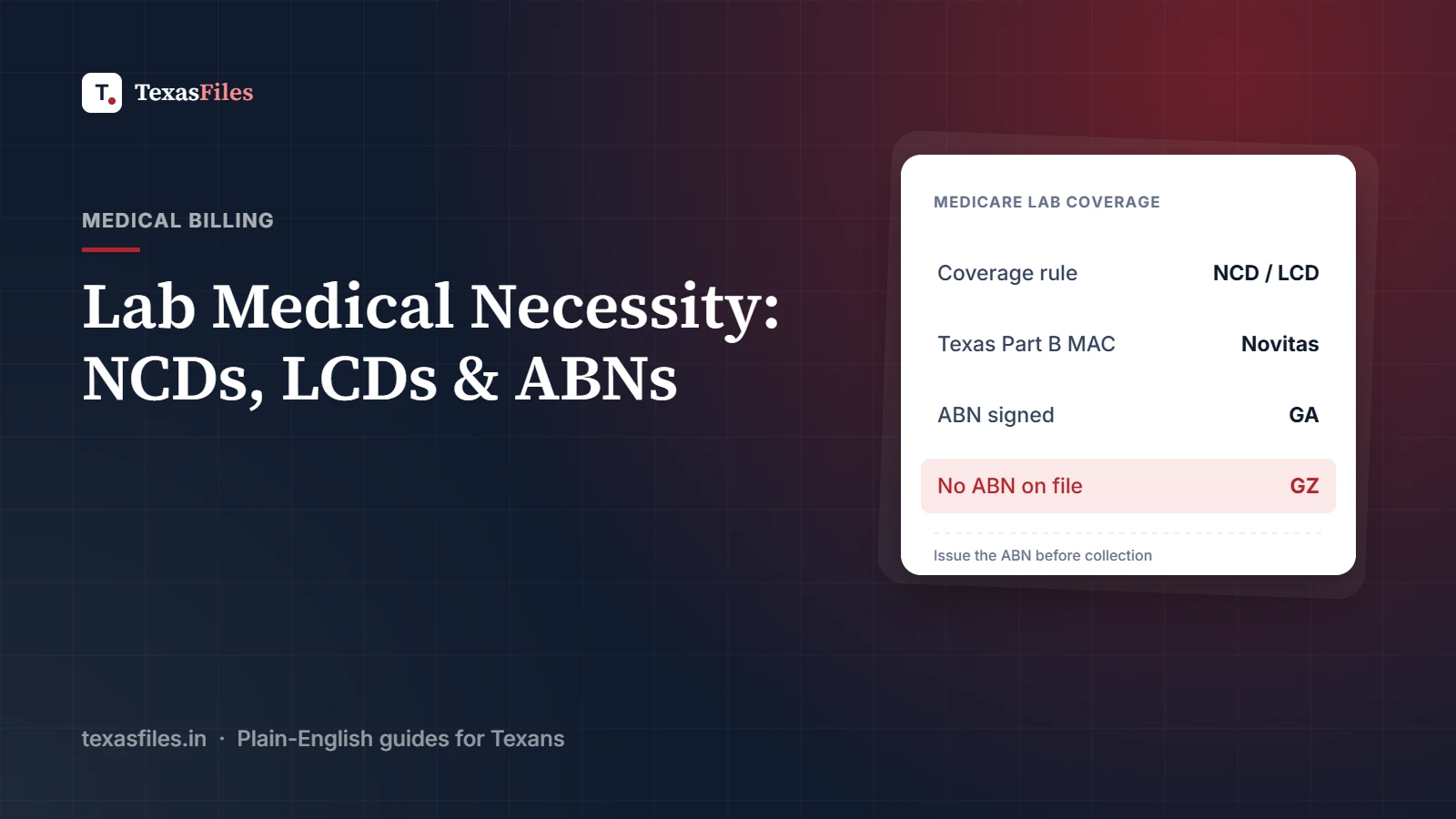
Lab Medical Necessity: NCDs, LCDs, and ABNs Explained
How Medicare decides if a lab test is covered: lab NCDs, Novitas LCDs, frequency limits, and when to use an ABN with modifiers GA, GZ, GX and GY.
·5 min read
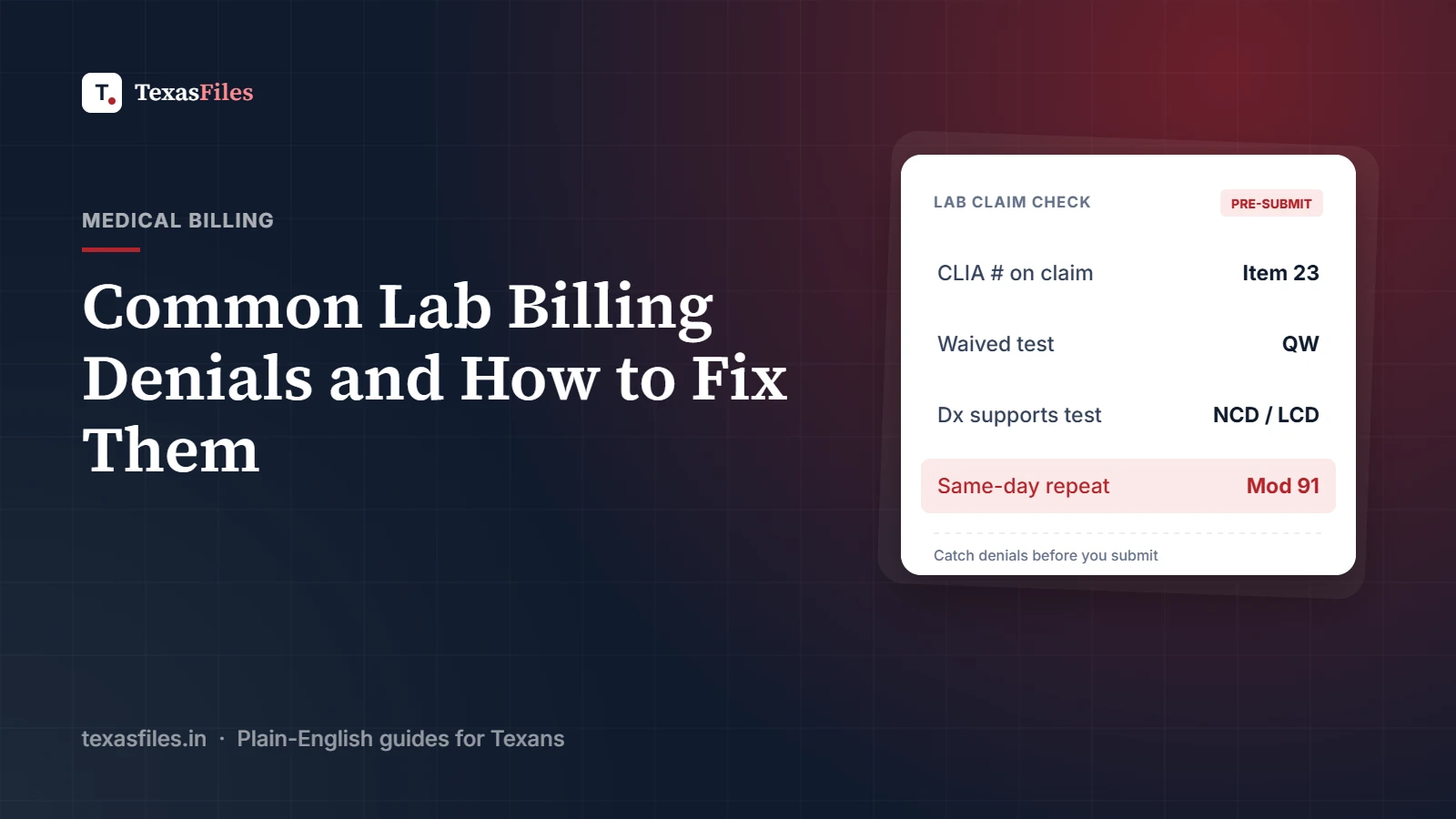
Common Lab Billing Denials and How to Fix Them
The 10 most common lab claim denials, from missing CLIA numbers and QW modifiers to medical necessity, frequency limits and panel unbundling, with fixes for each.
·6 min read