Lab Medical Necessity: NCDs, LCDs, and ABNs Explained
How Medicare decides if a lab test is covered: lab NCDs, Novitas LCDs, frequency limits, and when to use an ABN with modifiers GA, GZ, GX and GY.
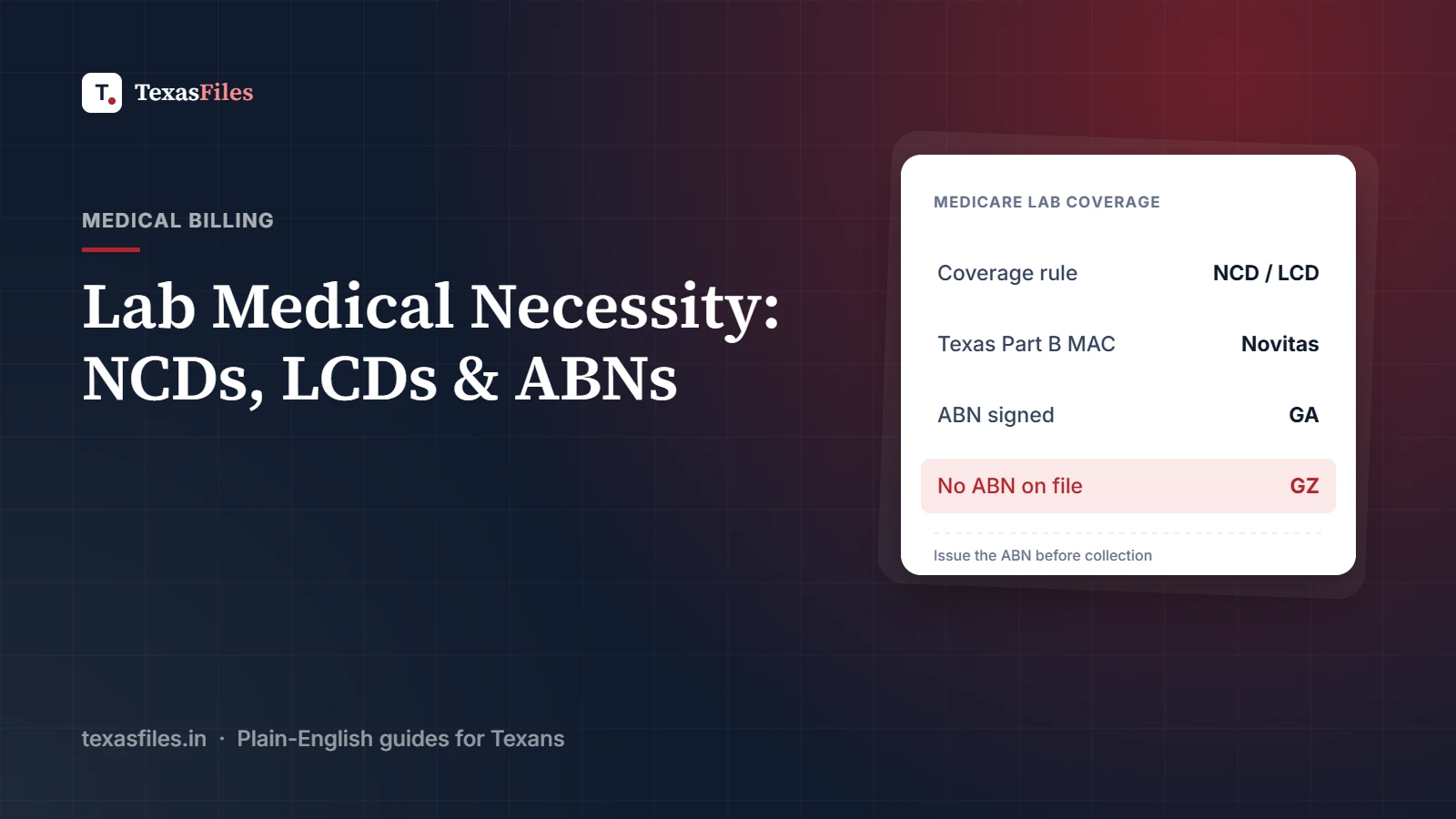
Medical necessity is the single biggest reason Medicare denies laboratory claims. A lab test can be ordered appropriately and performed perfectly, and still not be paid if the diagnosis on the claim doesn't support it under Medicare's coverage rules. When that happens without the right paperwork in place, the provider usually can't bill the patient either.
This guide explains how National Coverage Determinations (NCDs), Local Coverage Determinations (LCDs), and Advance Beneficiary Notices (ABNs) work together, and how to use them to protect your lab revenue.
What Medical Necessity Means for Lab Tests
Medicare pays for diagnostic lab tests when they're reasonable and necessary to diagnose or treat a patient's condition. Screening tests are only covered when Medicare has a specific screening benefit, such as certain cardiovascular, diabetes, or cancer screenings, and only at the covered intervals.
The diagnosis code on the claim is how Medicare decides. If the ICD-10 code doesn't appear on the list of covered diagnoses for that test, or the test was performed more often than the rules allow, the line is denied.
National Coverage Determinations (NCDs)
NCDs are national Medicare coverage rules. For clinical laboratory services, CMS has a set of lab NCDs covering commonly ordered tests, including:
Blood counts
Lipid testing
Glycated hemoglobin (A1c) and glucose testing
Thyroid testing
Prostate-specific antigen (PSA)
Urine cultures
Prothrombin time (PT) and partial thromboplastin time (PTT)
Tumor antigen tests and several others
Each lab NCD lists the conditions under which the test is covered, the ICD-10 codes that support it, codes that never support it, and frequency limits. CMS publishes the lab NCD coding policies and updates the code lists regularly.
Local Coverage Determinations (LCDs)
Where there is no NCD, Medicare Administrative Contractors (MACs) can publish LCDs for their regions. Texas falls under Novitas Solutions for Medicare Part B. LCDs and their companion billing articles list covered diagnosis codes, frequency limits, and documentation requirements for tests such as vitamin D, B12, and many specialized or molecular tests.
Always check the LCDs and articles from the MAC that covers the location where the test was performed.
Frequency Limits
Many lab NCDs and LCDs limit how often a test is covered for monitoring a condition. When a patient's test history isn't known, such as when another lab performed a recent test, a claim can deny even with the right diagnosis. Build frequency rules into your scrubber and obtain an ABN when a test may exceed the limit.
The Advance Beneficiary Notice (ABN)
The ABN (form CMS-R-131) is a written notice given to Original Medicare patients before a service that Medicare may not pay for. It explains why Medicare may deny the service, gives a cost estimate, and lets the patient choose whether to proceed and accept financial responsibility.
Timing: It must be given before the specimen is collected, with enough time for the patient to make an informed decision.
Specific reason: The notice must state why Medicare may not pay, such as "Medicare does not pay for this test for your condition" or "Medicare does not pay for this test as often as this." A blanket ABN given to every patient is not valid.
Patient choice: The patient selects an option and signs. Keep a copy on file.
Medicare Advantage: The ABN doesn't apply to Medicare Advantage plans, which use their own pre-service determination processes.
ABN Modifiers
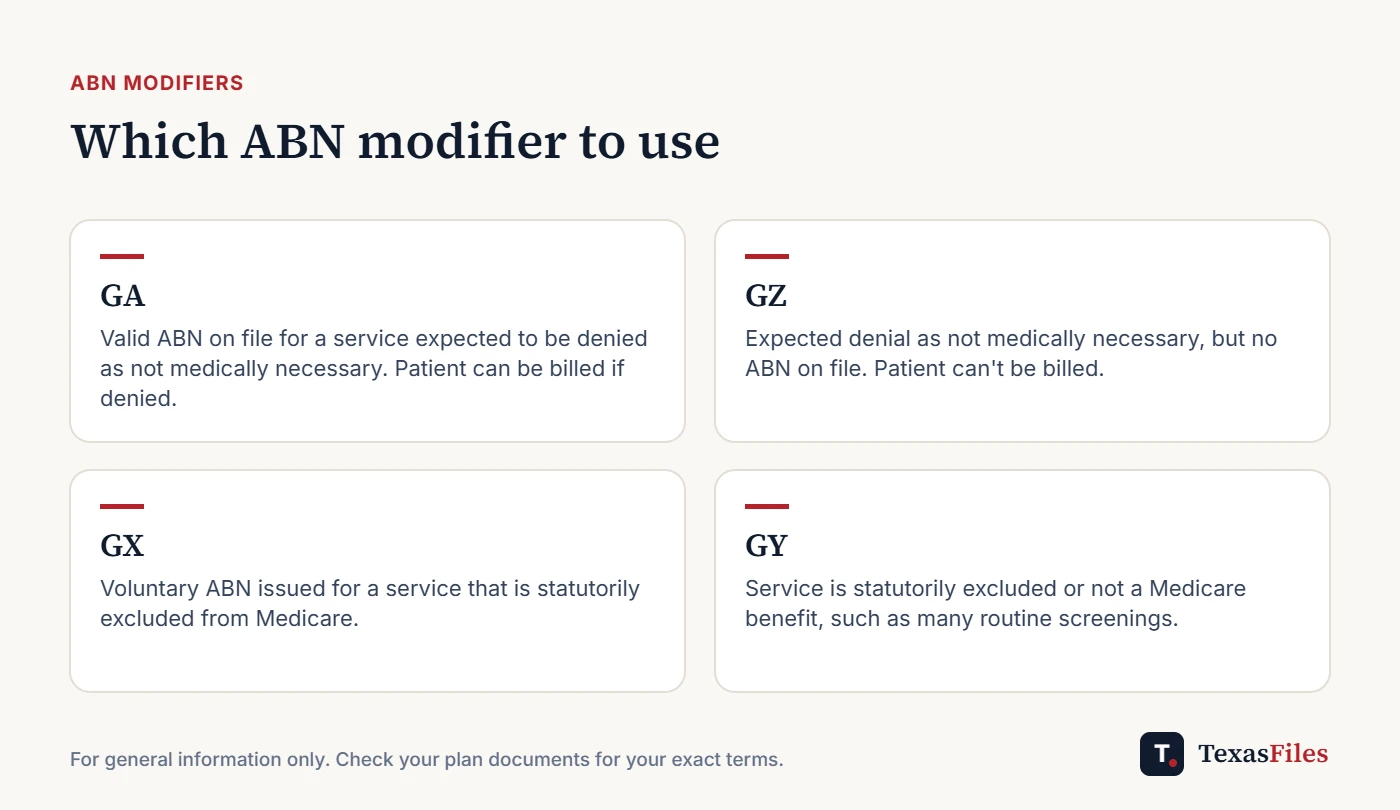
GA: A valid ABN is on file for a service expected to be denied as not reasonable and necessary. If Medicare denies, the patient can be billed.
GZ: The service is expected to be denied as not reasonable and necessary, but no ABN is on file. The provider can't bill the patient if Medicare denies.
GX: A voluntary ABN was issued for a service that's statutorily excluded from Medicare.
GY: The service is statutorily excluded or doesn't meet the definition of a Medicare benefit. Often used for routine screening tests that Medicare doesn't cover.
A Medical Necessity Workflow That Works
At ordering: Capture the most specific diagnosis code the provider documents. Electronic order entry can prompt for supported diagnoses.
Before collection: Run diagnosis and frequency checks against the NCD or LCD. If the test may not be covered, issue an ABN.
Before billing: Scrub the claim for diagnosis support, frequency limits, and the correct ABN modifier.
After denial: If the denial is wrong, such as a supported diagnosis that wasn't processed, correct and resubmit or appeal. If an ABN was signed, bill the patient according to their choice.
For other common causes of lab denials, see our guide to common lab billing denials and how to fix them.
Commercial Payers
Commercial and Medicare Advantage plans have their own medical policies for lab testing. Many mirror Medicare's lab NCDs, but some are stricter, especially for vitamin D testing, drug testing, allergy testing, and genetic or molecular tests, which often require prior authorization. Some plans also use lab benefit management programs. Patient financial responsibility notices for commercial plans follow the payer's contract and state law, not the Medicare ABN rules.
Frequently Asked Questions
Can we give every Medicare patient an ABN just in case?
No. Routine or blanket ABNs aren't valid. The ABN must give a specific reason why Medicare may not pay for that test.
What if the patient refuses to sign the ABN?
Document the refusal. The provider can decide whether to proceed with the test, considering the patient's needs.
Does the ordering provider or the lab give the ABN?
The entity that will bill Medicare is responsible, but in practice, the ordering office often issues it because it sees the patient before the specimen is collected. Coordinate with your reference lab.
Can a better diagnosis code be added after the test?
Only if the provider's documentation supports it. Never add a diagnosis just to get a claim paid.
The Bottom Line
Medicare lab coverage depends on the diagnosis, the applicable NCD or LCD, and frequency rules. Check coverage before the specimen is collected, issue a specific ABN when coverage is uncertain, use the right modifier, and you'll turn many unpaid lab tests into either clean claims or legitimate patient balances.
Keep reading
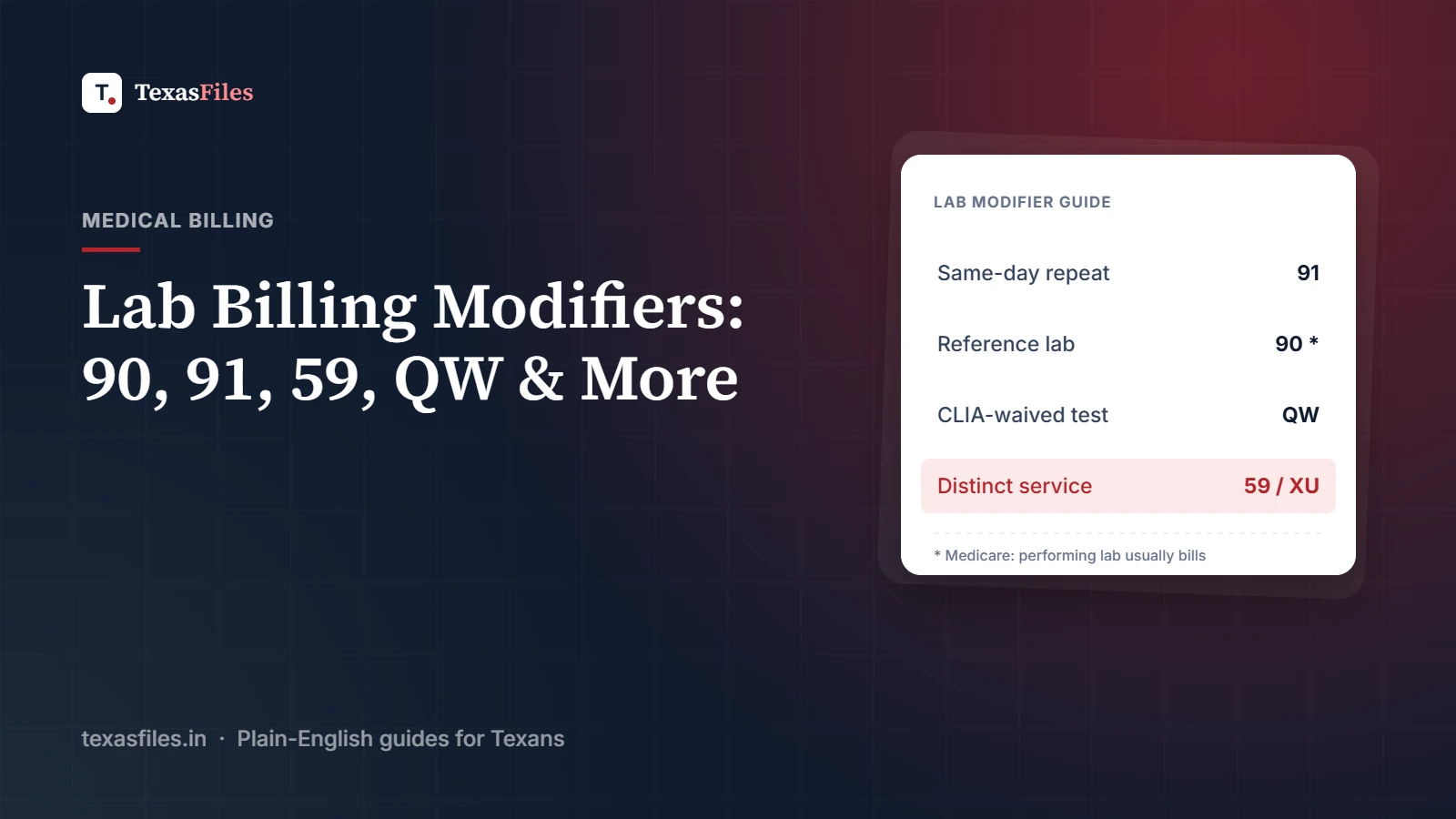
Lab Billing Modifiers Explained: 90, 91, 59, QW, and More
When to use lab modifiers 91, 90, QW, 59 and the X modifiers, 26 and TC, and ABN modifiers, plus the common mistakes that cause duplicate and bundling denials.
·4 min read
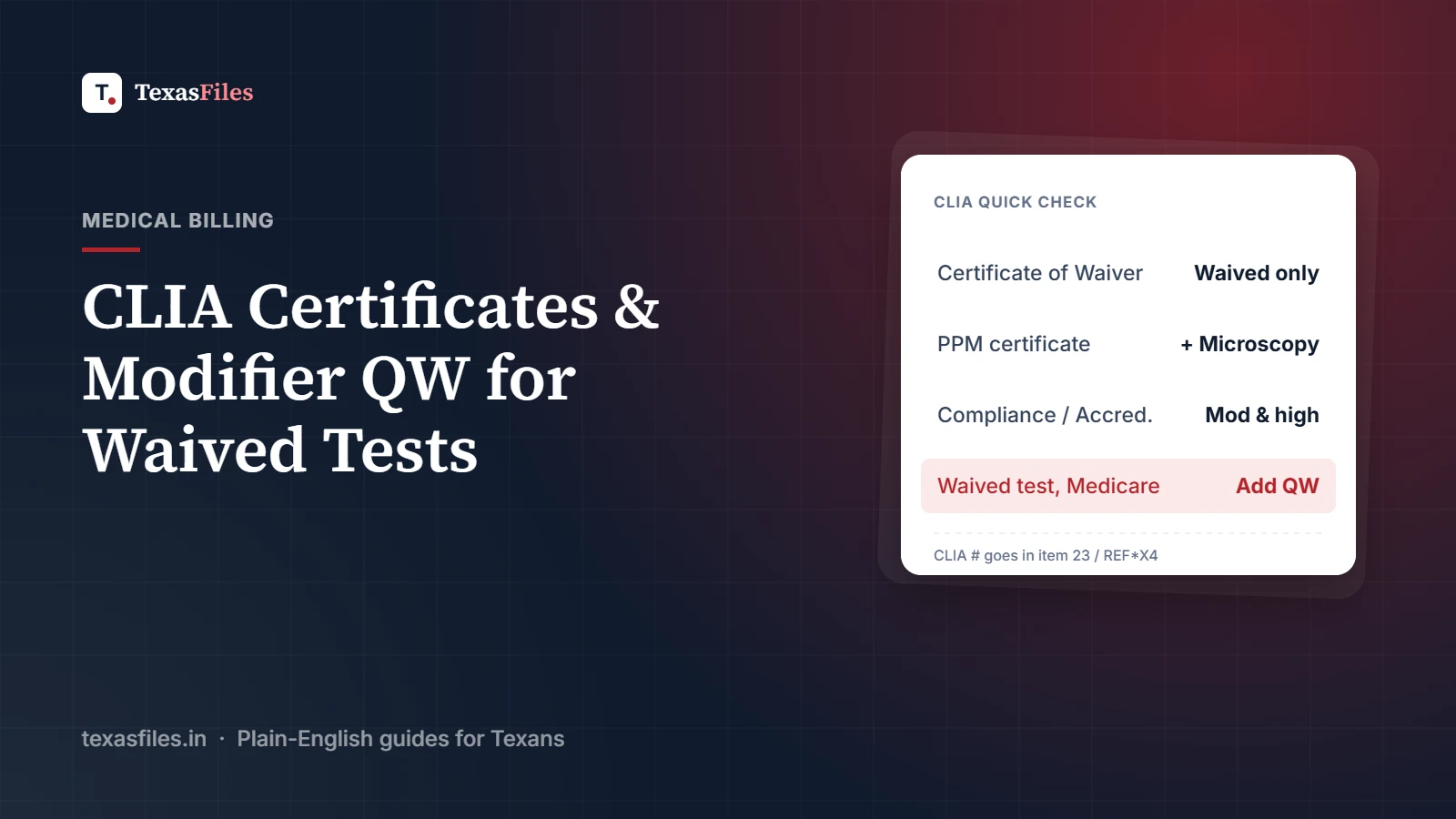
CLIA Certificates and Modifier QW: Billing Waived Lab Tests
CLIA certificate types, where the CLIA number goes on the CMS-1500 and 837P, and when Medicare requires modifier QW for waived lab tests.
·4 min read
Common Lab Billing Denials and How to Fix Them
The 10 most common lab claim denials, from missing CLIA numbers and QW modifiers to medical necessity, frequency limits and panel unbundling, with fixes for each.
·6 min read