Lab Billing Modifiers Explained: 90, 91, 59, QW, and More
When to use lab modifiers 91, 90, QW, 59 and the X modifiers, 26 and TC, and ABN modifiers, plus the common mistakes that cause duplicate and bundling denials.
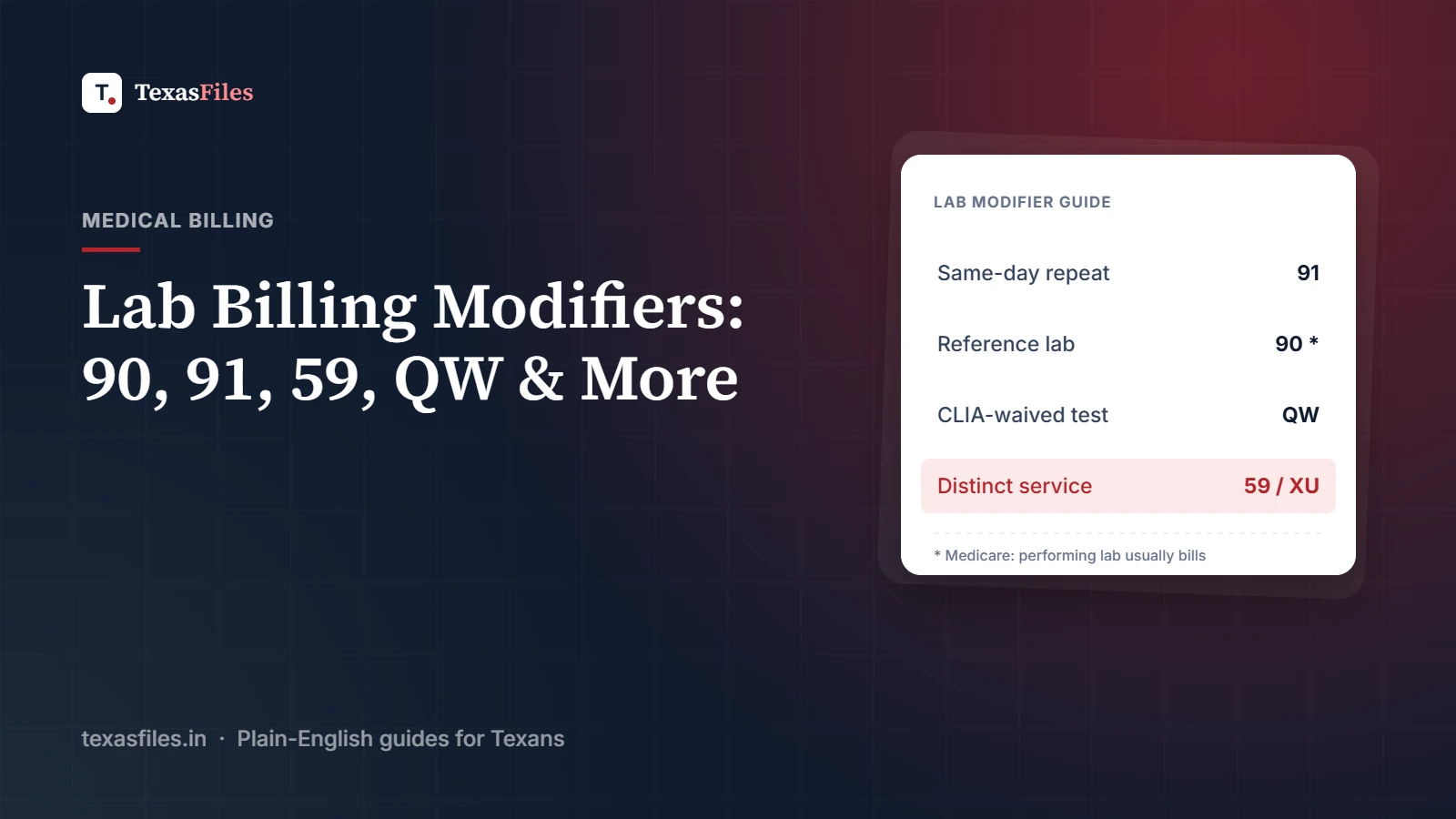
Modifiers tell payers the story behind a lab charge: whether a test was repeated on purpose, performed by an outside lab, separate from another service, or waived under CLIA. Using the wrong modifier, or skipping one, is a common reason lab lines deny as duplicates, bundled services, or invalid for the provider's certificate. This guide explains the modifiers billers use most on lab claims and when each one applies.
Modifier 91: Repeat Clinical Diagnostic Laboratory Test
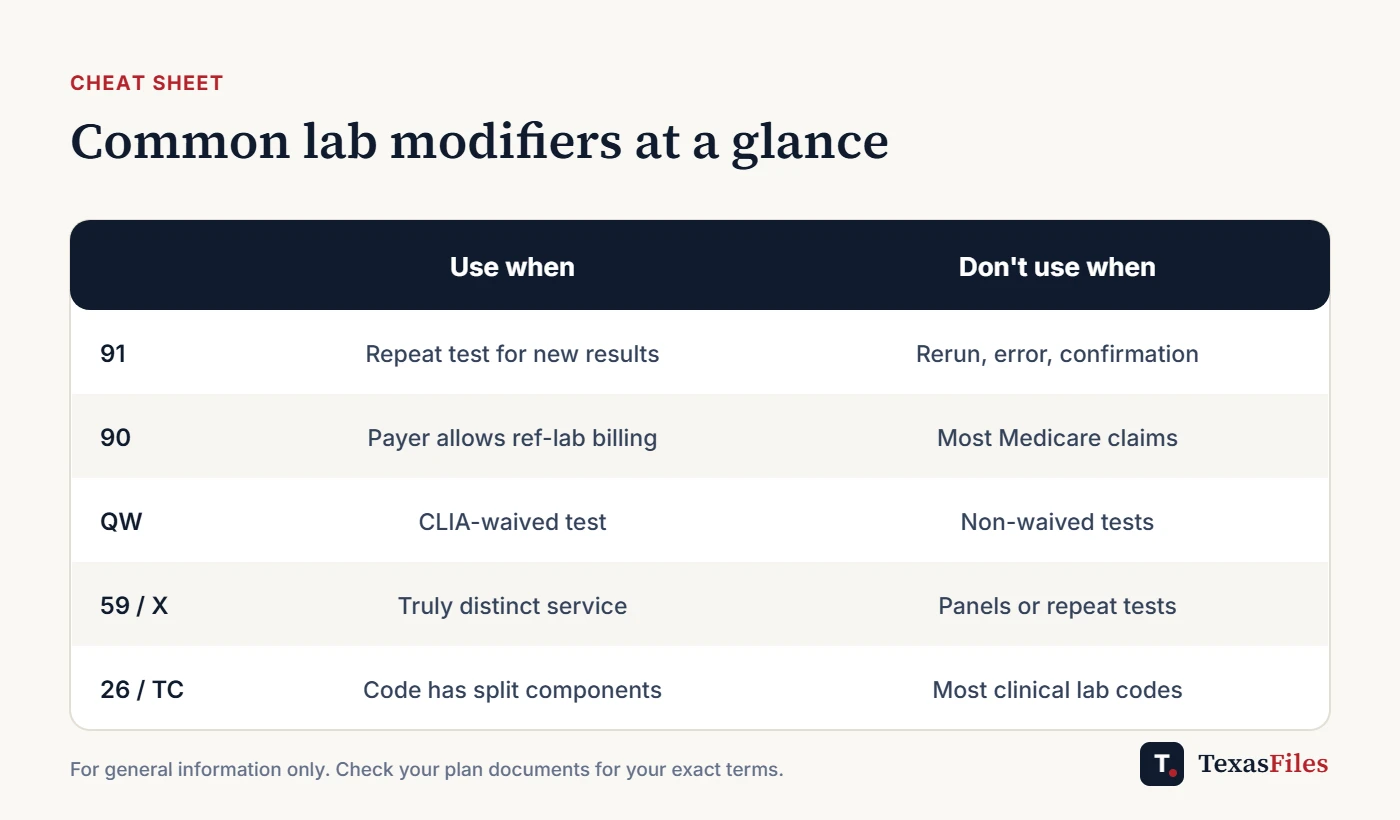
Use modifier 91 when the same lab test is performed more than once on the same day for the same patient, and the repeat test is medically necessary to obtain subsequent results.
Correct use: Serial tests ordered to track a changing condition, such as repeated potassium levels during treatment, serial troponins, or glucose tolerance testing.
Don't use it: When a test is rerun to confirm the first result, because of a specimen problem, or because of equipment failure. Also don't use it when a different code exists for a series of tests.
Billing: Bill the first test without the modifier and each additional test on a separate line with modifier 91. Document the time and reason for each.
Modifier 90: Reference (Outside) Laboratory
Modifier 90 indicates that a lab test was performed by an outside, or reference, laboratory, but billed by the practice that received the specimen.
Medicare: Medicare generally requires the lab that performs the test to bill for it directly, with limited exceptions. In most cases, a physician practice can't bill Medicare for tests sent to an outside lab.
Commercial payers: Some allow the referring practice to bill with modifier 90 under their contract, while others require the performing lab to bill. Check each payer's policy before billing.
Documentation: Report the performing lab's information on the claim when the payer requires it.
Modifier QW: CLIA-Waived Test
Modifier QW identifies a test categorized as CLIA-waived. Medicare requires it on most waived tests billed under a Certificate of Waiver, and some commercial payers follow the same rule. A few waived codes are exempt from the QW requirement. Learn more in our guide to CLIA certificates and modifier QW.
Modifier 59 and the X Modifiers: Distinct Procedural Service
Modifier 59, or the more specific XE, XS, XP, and XU modifiers for Medicare, indicates that a service is distinct from another service on the same day that NCCI edits would otherwise bundle.
XE: Separate encounter
XS: Separate structure or organ
XP: Separate practitioner
XU: Unusual non-overlapping service
In lab billing, these modifiers are used sparingly, for example when tests that are normally bundled are truly performed on separate specimens or at separate encounters. They should never be used to bypass edits for panel components or repeat tests. If a test is a repeat of the same test, modifier 91 is usually the right choice, not 59.
Modifiers 26 and TC: Professional and Technical Components
Most clinical lab tests have no separate professional component. However, some pathology services, such as surgical pathology and certain clinical pathology consultations, can be split:
Modifier 26: The professional component, such as a pathologist's interpretation.
Modifier TC: The technical component, such as preparing the slides.
Only use these modifiers on codes that have separate components in the Medicare fee schedule.
ABN Modifiers: GA, GZ, GX, and GY
When coverage is uncertain for a Medicare patient, these modifiers tell Medicare whether an Advance Beneficiary Notice is on file and whether the patient can be billed if the claim is denied. See our guide to lab medical necessity and ABNs for details.
Common Lab Modifier Mistakes
Using modifier 59 instead of 91 for same-day repeat tests
Using modifier 91 for reruns caused by specimen or equipment problems
Billing Medicare with modifier 90 for tests performed by a reference lab
Forgetting QW on waived tests, or adding it to non-waived tests
Using 59 to unbundle panel components that should be billed under the panel code
Adding 26 or TC to codes without separate components
Missing GA when a signed ABN is on file, losing the ability to bill the patient
For a full look at lab denial causes, read common lab billing denials and how to fix them.
Tips to Keep Modifiers Accurate
Build modifier rules into your scrubber: Automatically add QW to waived codes and flag duplicate lab lines for review.
Train lab and billing staff together: The lab knows why a test was repeated; billing needs that information to choose 91 correctly.
Check payer policies: Commercial payers vary widely on modifier 90, QW, and X modifiers.
Audit regularly: Review a sample of claims with 59, 91, and 90 each quarter. These modifiers attract payer audits.
Frequently Asked Questions
What's the difference between modifier 59 and 91 for labs?
Modifier 91 is for the same test repeated on the same day to get new results. Modifier 59 is for distinct services that would otherwise be bundled. For repeat lab tests, 91 is usually correct.
Can a physician office bill Medicare for tests sent to LabCorp or Quest?
Generally no. In most cases, Medicare requires the lab that performs the test to bill Medicare directly.
Do all payers require QW?
No. Medicare requires it for most waived tests, and some commercial payers follow suit. Check each payer's policy.
The Bottom Line
The right lab modifier explains a charge that would otherwise look like an error. Use 91 for medically necessary repeat tests, QW for waived tests, 90 only where the payer allows reference lab billing, and 59 or X modifiers only for truly distinct services. Accurate modifiers mean fewer duplicate and bundling denials, and fewer audit headaches.
Keep reading
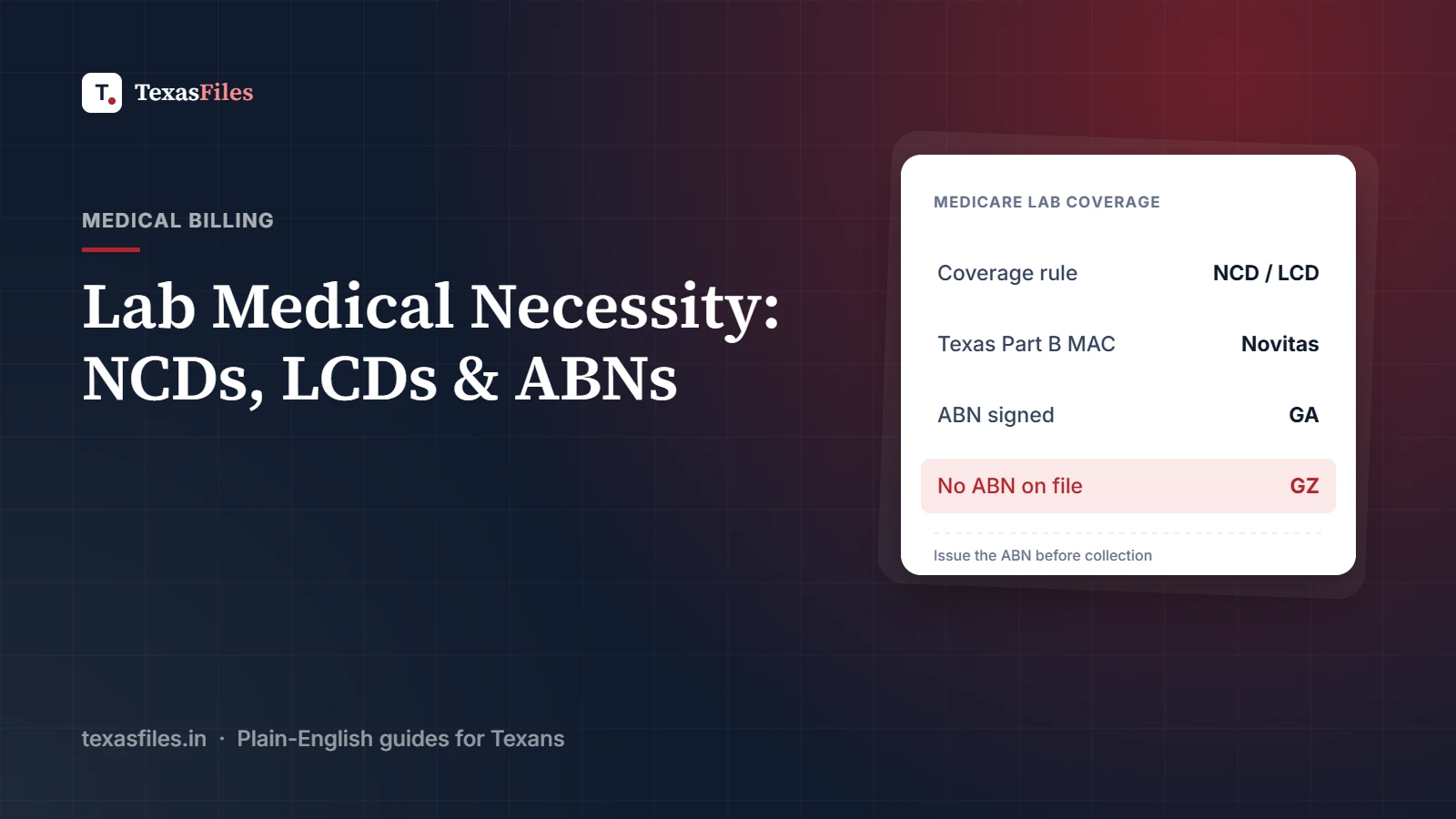
Lab Medical Necessity: NCDs, LCDs, and ABNs Explained
How Medicare decides if a lab test is covered: lab NCDs, Novitas LCDs, frequency limits, and when to use an ABN with modifiers GA, GZ, GX and GY.
·5 min read
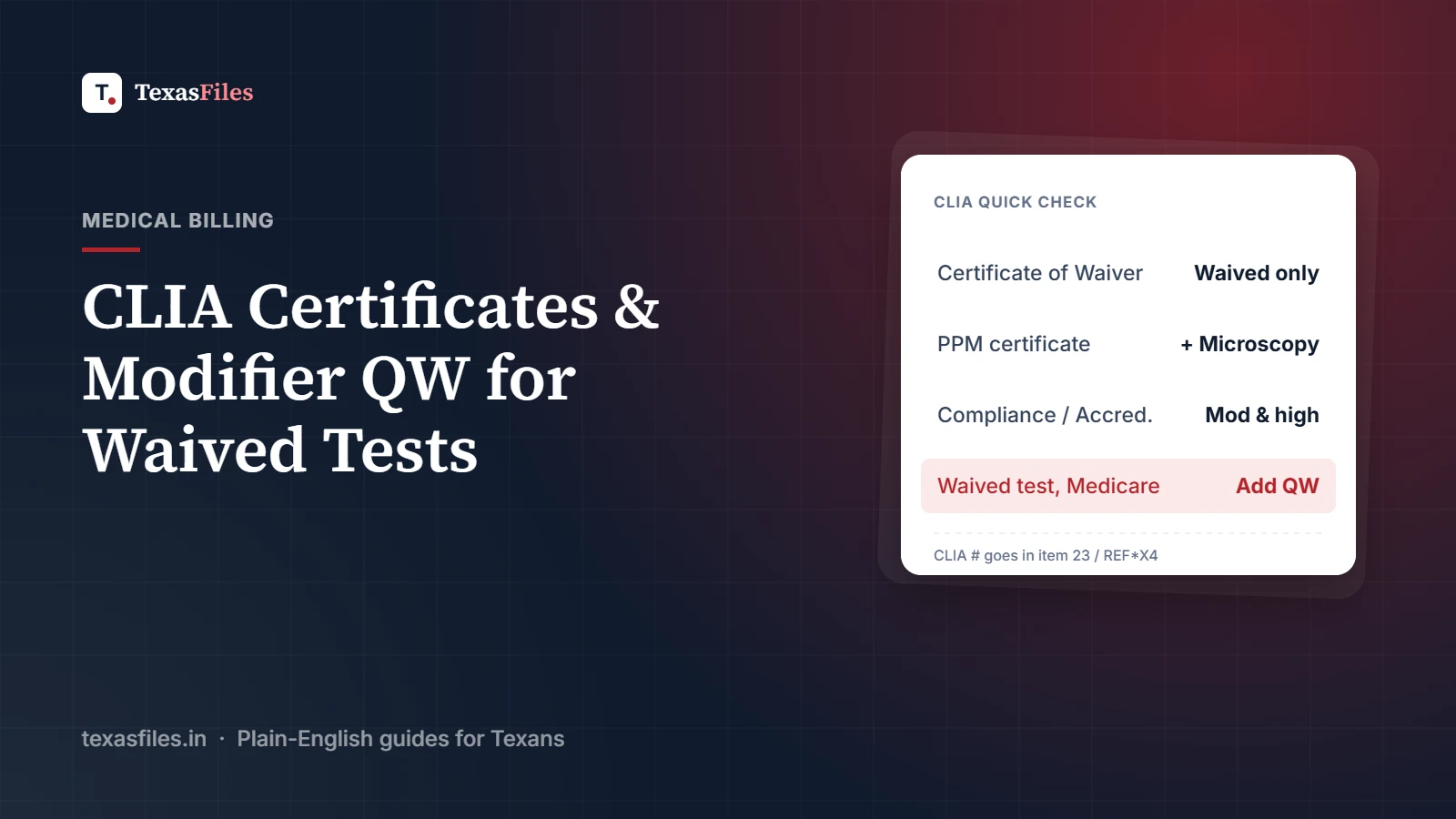
CLIA Certificates and Modifier QW: Billing Waived Lab Tests
CLIA certificate types, where the CLIA number goes on the CMS-1500 and 837P, and when Medicare requires modifier QW for waived lab tests.
·4 min read
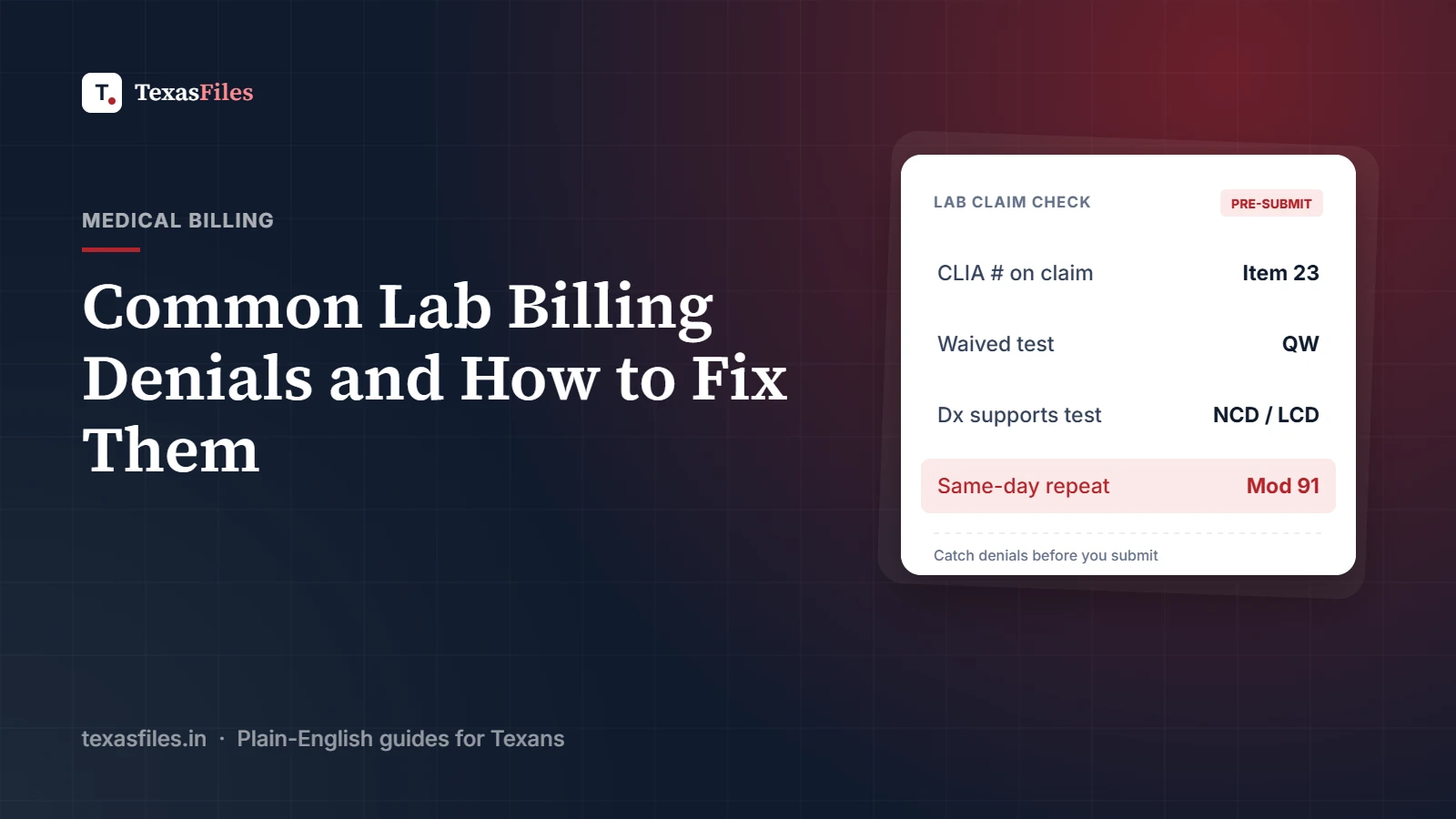
Common Lab Billing Denials and How to Fix Them
The 10 most common lab claim denials, from missing CLIA numbers and QW modifiers to medical necessity, frequency limits and panel unbundling, with fixes for each.
·6 min read