Deductible vs. Copay vs. Coinsurance vs. Out-of-Pocket Maximum, Explained
Deductible, copay, coinsurance and out-of-pocket maximum explained in plain English, with a full-year example showing exactly what you'd pay.
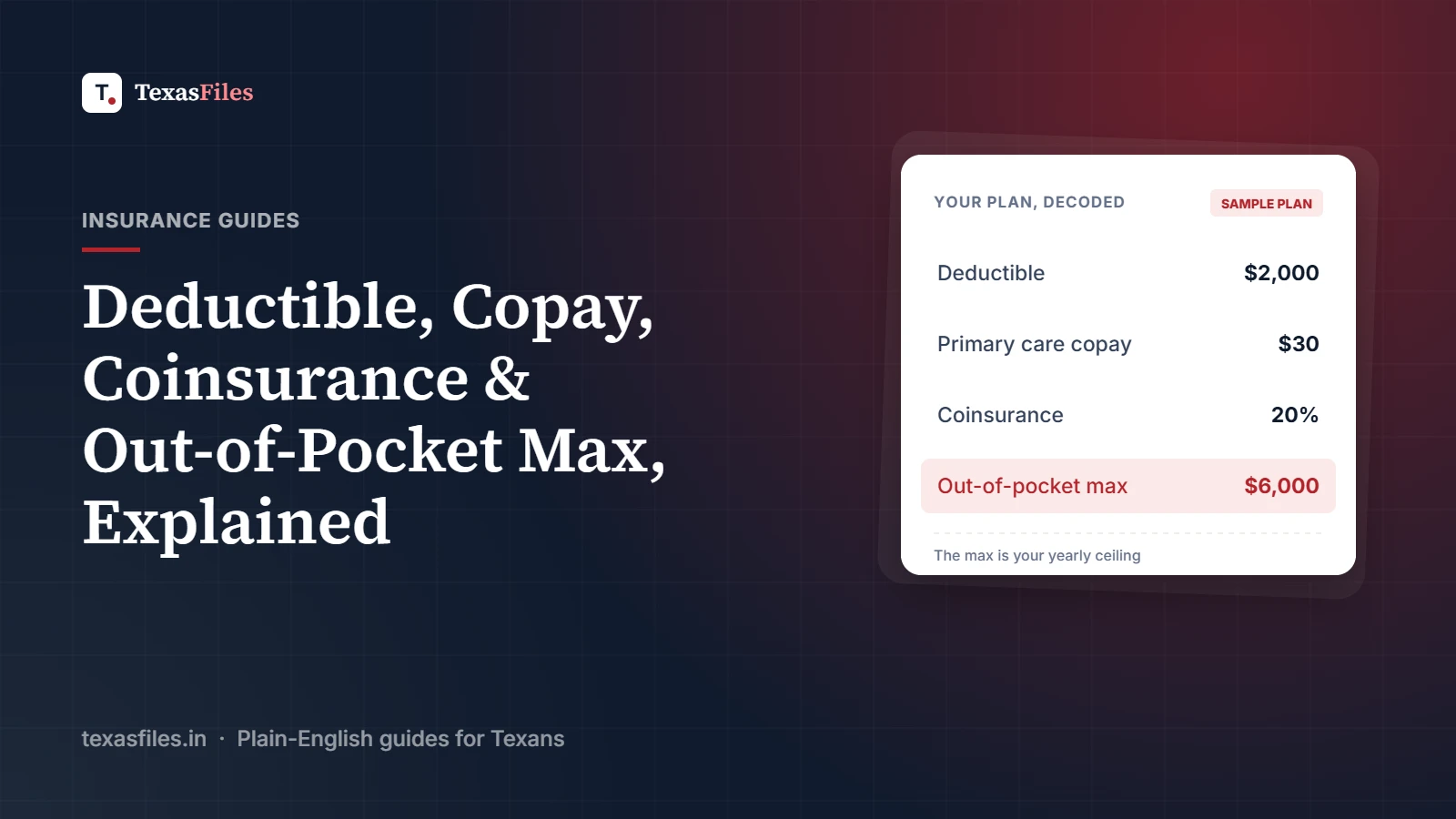
Deductible, copay, coinsurance, out-of-pocket maximum. These four terms decide how much you pay every time you use your health insurance, yet most people only half understand them until a surprisingly large bill arrives. The good news: once you see how they fit together, you can predict your costs, compare plans intelligently, and spot billing mistakes.
This guide explains each term in plain English and walks through a full-year example.
The Monthly Premium: The Cost of Having Coverage
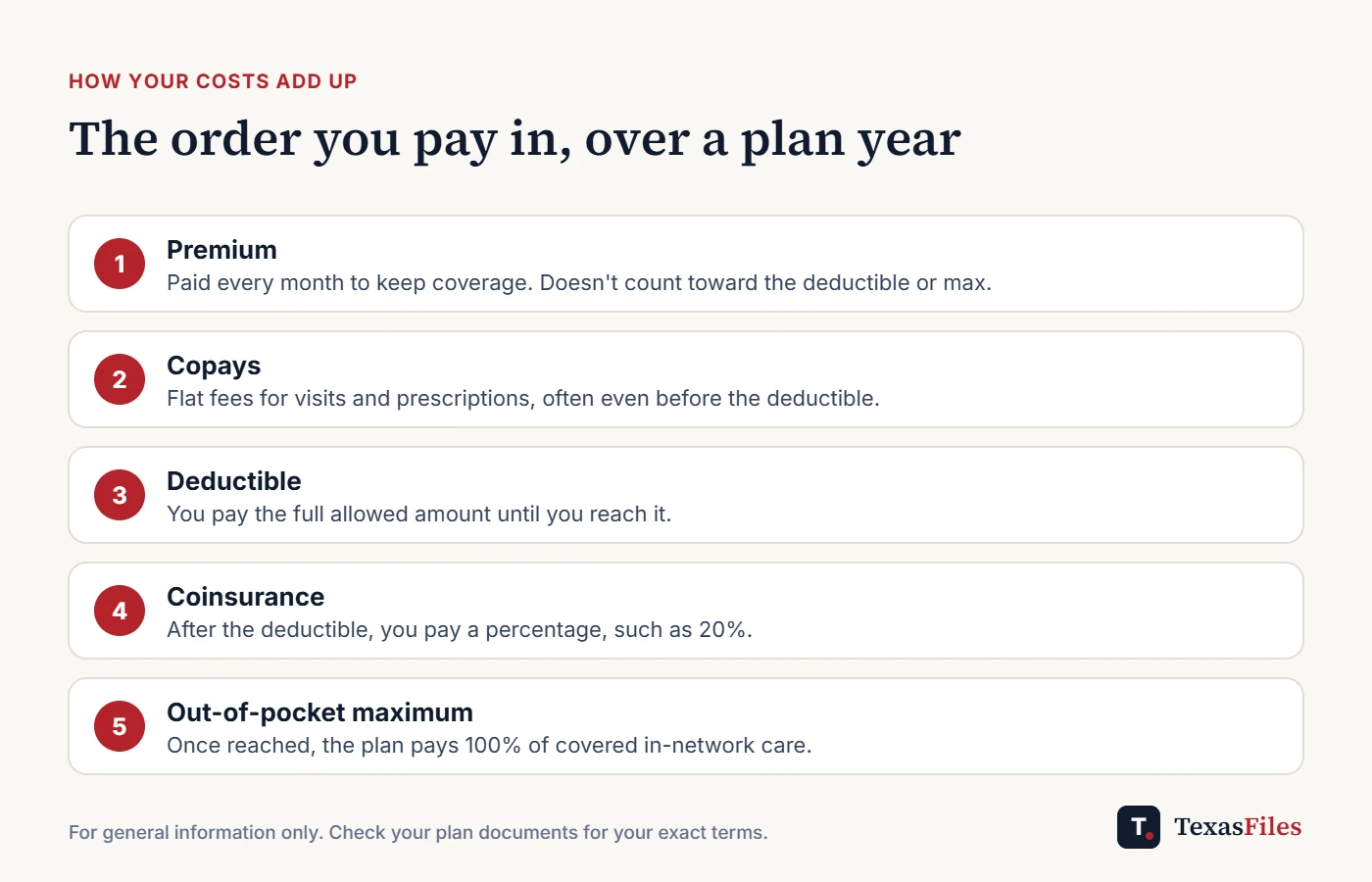
Before the four terms below, there's the premium: what you pay each month to keep your plan active, whether or not you see a doctor. Premiums don't count toward your deductible or out-of-pocket maximum. A low premium usually means higher costs when you actually use care, and a high premium usually means lower costs at the doctor's office.
Deductible: What You Pay Before Insurance Starts Sharing
Your deductible is the amount you pay for covered services each plan year before your insurance begins paying its share. If your deductible is $2,000, you generally pay the full allowed amount for covered care until your spending reaches $2,000.
It resets every year. Most plans reset on January 1, though some employer plans use a different plan year.
Not everything goes through the deductible. Under the Affordable Care Act, most plans must cover many preventive services, like annual checkups and recommended screenings, at no cost when you use an in-network provider. Many plans also charge a flat copay for office visits or generic drugs before you meet the deductible.
You pay the allowed amount, not the list price. Even before you meet your deductible, in-network providers can only charge you the plan's negotiated rate.
Copay: A Flat Fee per Service
A copay (or copayment) is a fixed dollar amount for a specific service, such as $30 for a primary care visit, $60 for a specialist, or $10 for a generic prescription. Your plan's Summary of Benefits and Coverage lists each one.
Copays are predictable, which is their main advantage. Check whether a given copay applies before or after the deductible, because plans handle this differently.
Coinsurance: Your Percentage After the Deductible
Once you've met your deductible, many services switch to coinsurance, which is a percentage split. With 20% coinsurance, you pay 20% of the allowed amount and the plan pays 80%.
Coinsurance is where large bills live. Twenty percent of a $30,000 hospital stay is $6,000, which is why the next term matters so much.
Out-of-Pocket Maximum: Your Financial Safety Net
The out-of-pocket maximum is the most you'll pay for covered, in-network care in a plan year. Your deductible, copays, and coinsurance all count toward it. Once you reach it, the plan pays 100% of covered in-network services for the rest of the year.
Premiums don't count toward the maximum.
Out-of-network care may not count, or may have a separate, higher maximum. Some plans have no out-of-network maximum at all.
Non-covered services don't count, such as cosmetic procedures or drugs your plan excludes.
Federal law caps it. For ACA-compliant plans, the government sets a maximum out-of-pocket limit each year, for both individual and family coverage.
A Full-Year Example
Imagine a plan with a $2,000 deductible, 20% coinsurance, a $30 primary care copay, and a $6,000 out-of-pocket maximum.
February: An annual checkup. It's preventive and in-network, so you pay $0.
April: A sick visit with your primary care doctor. You pay the $30 copay.
June: An MRI with an allowed amount of $1,500. You haven't met your deductible, so you pay all $1,500. Deductible remaining: $500.
September: Outpatient surgery with an allowed amount of $12,000. You pay the remaining $500 of your deductible, then 20% of the other $11,500, which is $2,300. Total: $2,800.
November: A hospital stay with an allowed amount of $25,000. Twenty percent would be $5,000, but you've already spent $4,330 toward your $6,000 maximum. You pay only $1,670, and the plan covers everything else for the rest of the year.
Your total for the year, excluding premiums, is $6,000, even though the allowed charges added up to more than $38,000.
How to Use This When Comparing Plans
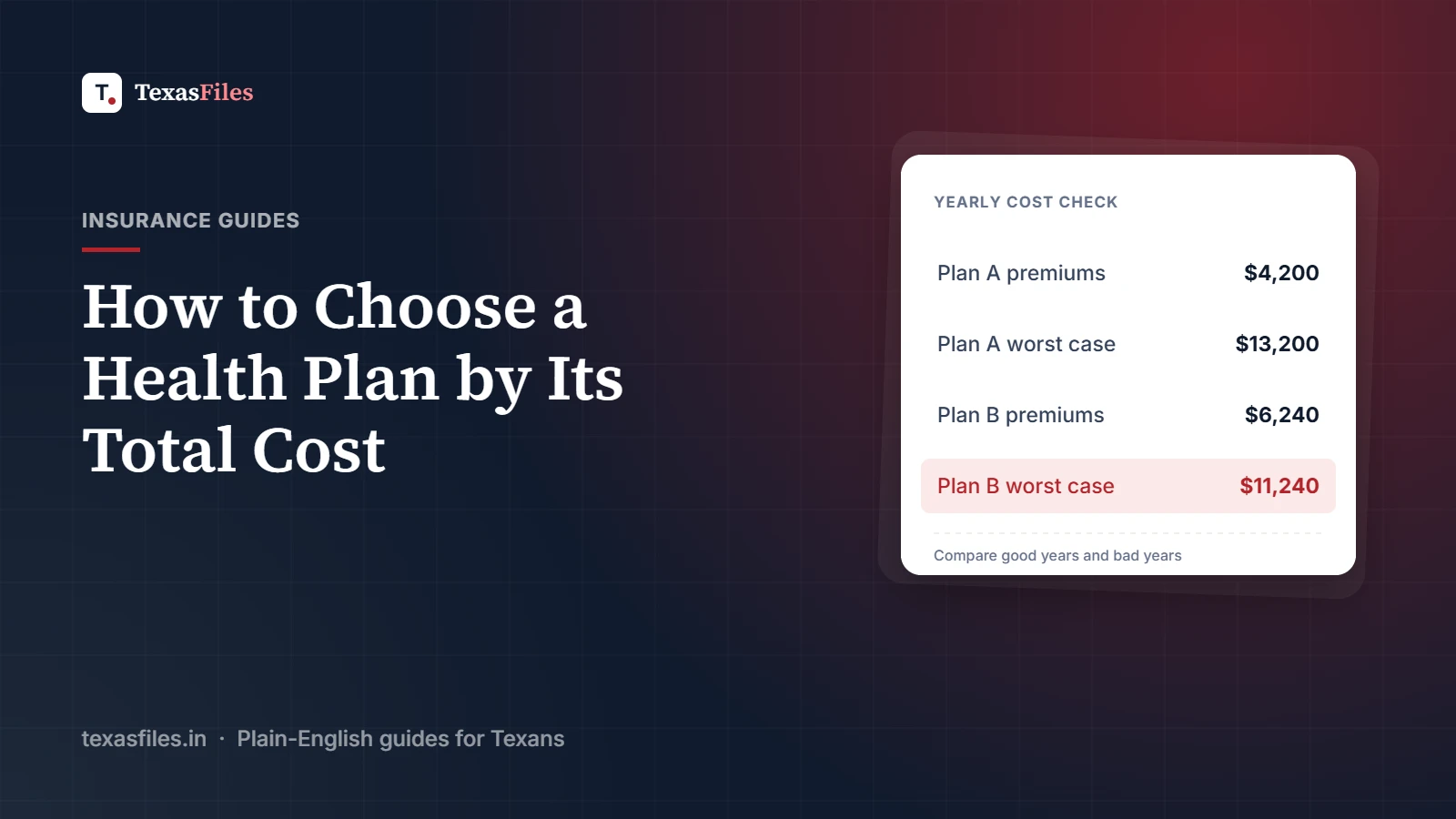
Don't choose a plan on premium alone. Estimate your total yearly cost:
Healthy year: 12 months of premiums plus a few copays.
Bad year: 12 months of premiums plus the full out-of-pocket maximum.
Comparing both scenarios for each plan shows you the real range of what you might spend. Our guide on how to choose a health insurance plan walks through this step by step.
Frequently Asked Questions
Does my copay count toward my deductible?
It depends on the plan. Copays almost always count toward your out-of-pocket maximum, but many plans don't apply them to the deductible. Check your Summary of Benefits and Coverage.
What happens when I hit my out-of-pocket maximum?
Your plan pays 100% of covered in-network services for the rest of the plan year. You still pay your monthly premiums.
Is a family deductible different?
Yes. Family plans typically have an individual deductible for each person and a larger family deductible. Once the family total is met, the deductible is satisfied for everyone on the plan.
The Bottom Line
Your deductible is what you pay first, copays are flat fees, coinsurance is your percentage after the deductible, and the out-of-pocket maximum is your ceiling. Know these four numbers for your plan, and you can predict your costs and check every medical bill against your Explanation of Benefits.
Keep reading

HSA vs. FSA vs. HRA: Health Accounts Explained
HSA, FSA and HRA explained: who can use each account, who contributes, rollover rules and how to pay medical bills with tax-free money.
·4 min read
How to Choose a Health Insurance Plan: Compare the Total Cost, Not the Premium
The cheapest premium isn't always the cheapest plan. Learn how to compare health plans by total yearly cost, networks and drug coverage.
·3 min read
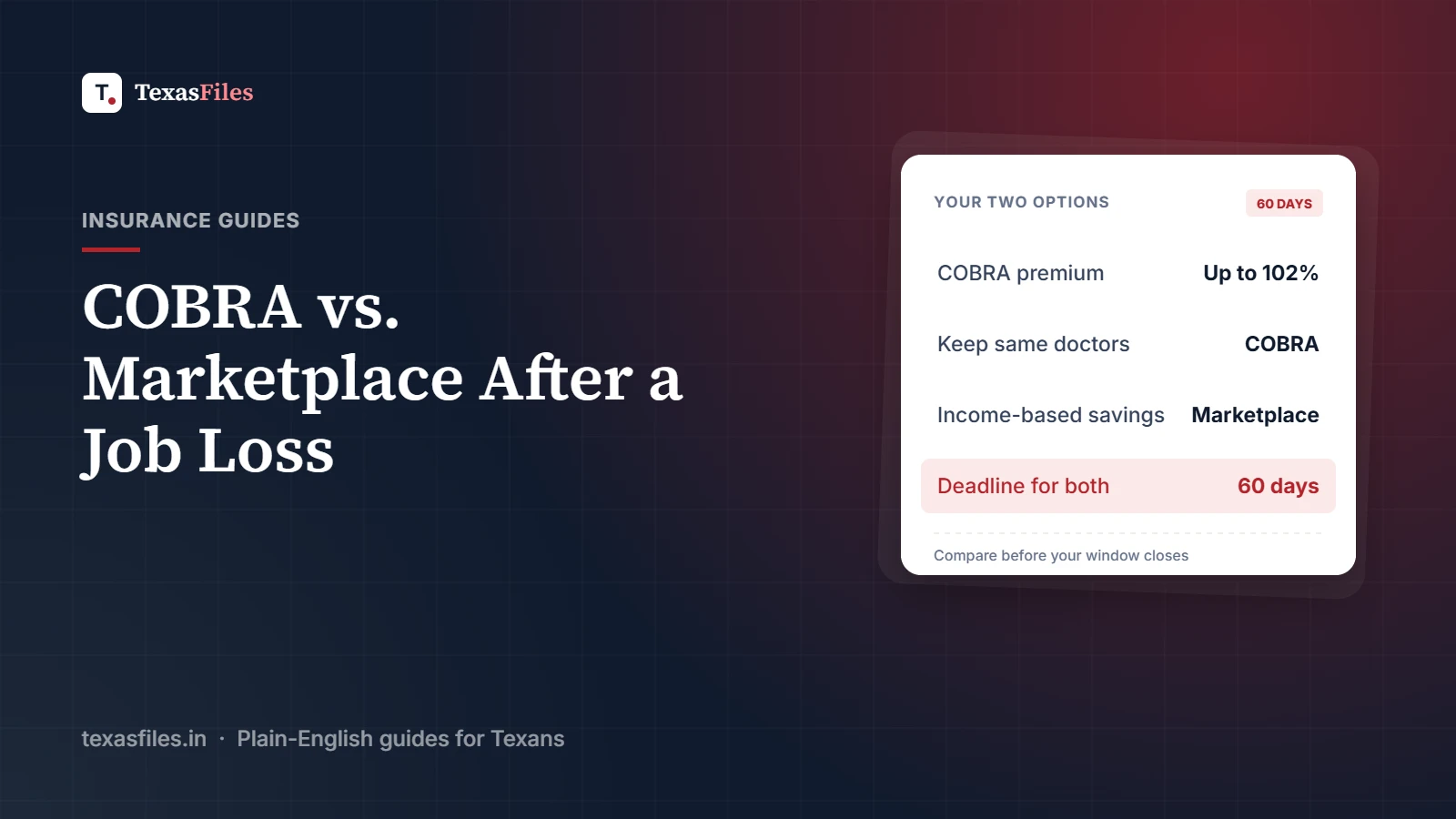
COBRA vs. Marketplace Insurance After a Job Loss in Texas
Lost your job? Compare COBRA and a HealthCare.gov Marketplace plan: costs, deadlines, networks and when each option makes sense for Texans.
·4 min read