HMO vs. PPO vs. EPO vs. POS: Which Health Plan Type Is Right for You?
Compare HMO, PPO, EPO and POS health plans: networks, referrals, out-of-network coverage and costs, and how to choose the right type in Texas.
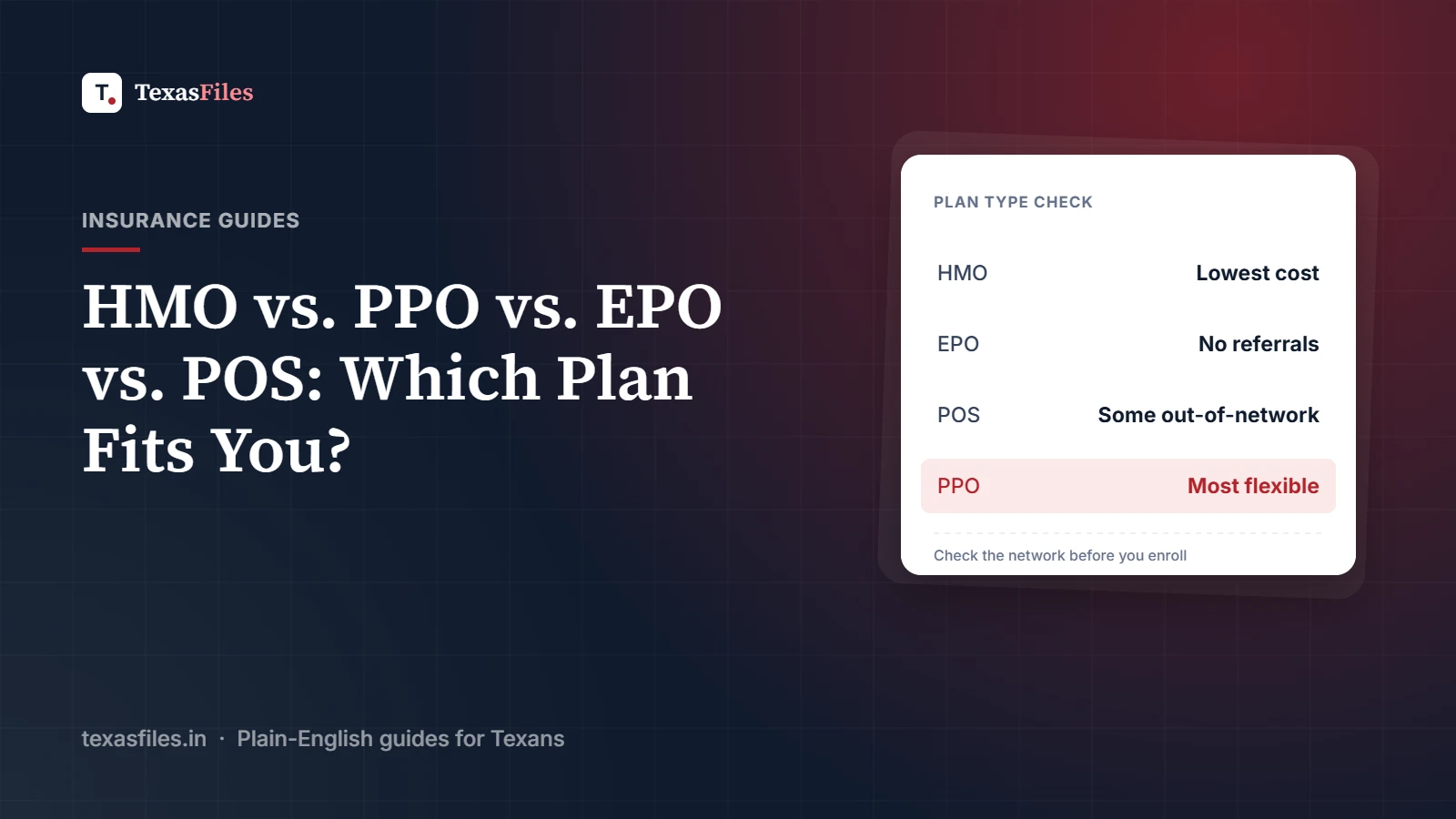
When you shop for health insurance in Texas, whether through an employer or the federal Marketplace at HealthCare.gov, you'll see plans labeled HMO, PPO, EPO, and POS. These letters describe the plan's network rules: which doctors you can see, whether you need referrals, and what happens if you go outside the network. Choosing the wrong type can mean losing access to a doctor you love or paying far more than you expected.
Here is how each plan type works and who each one fits best.
HMO: Health Maintenance Organization
An HMO covers care only from doctors and hospitals in its network, except in emergencies. You usually choose a primary care physician (PCP) who coordinates your care and gives you referrals to see specialists.
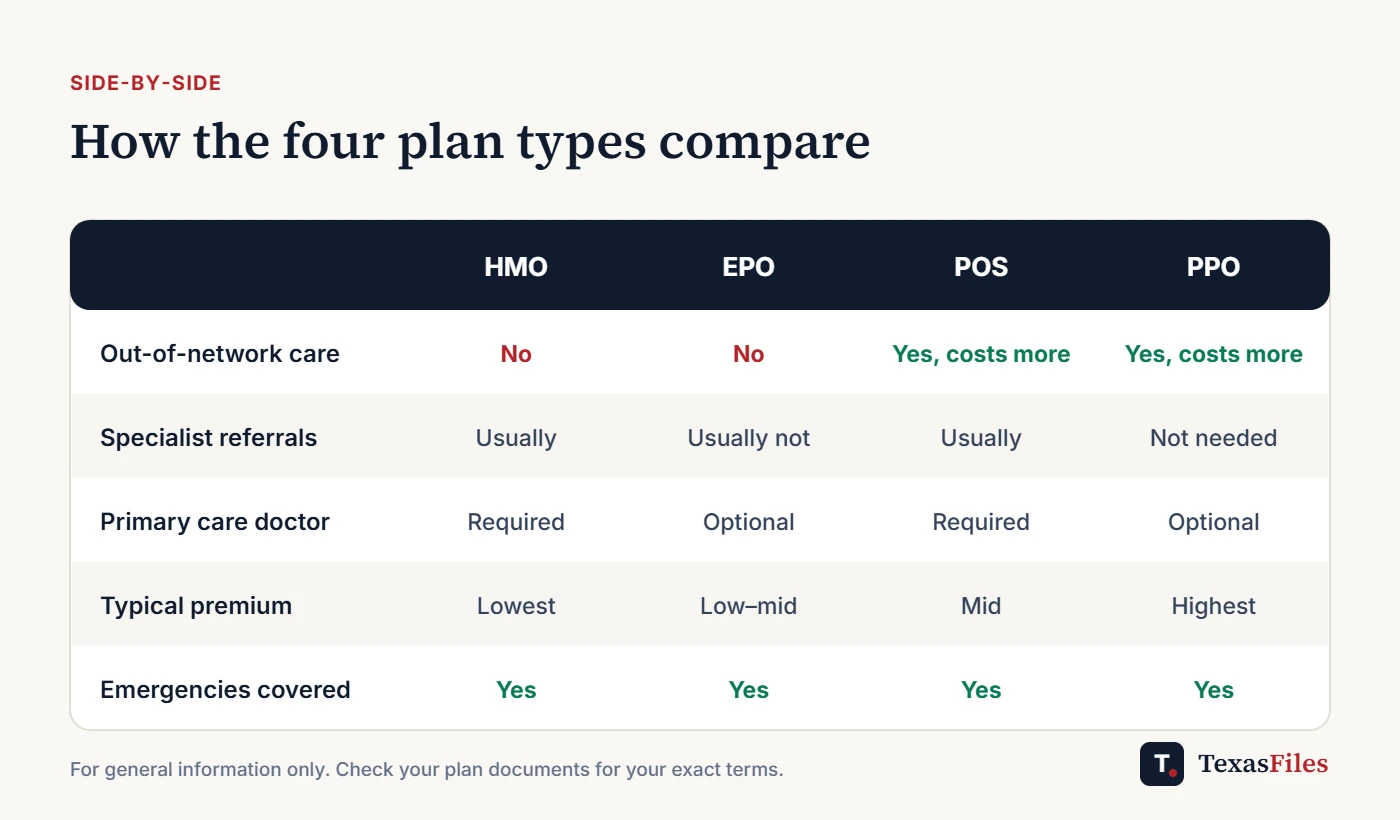
Out-of-network coverage: None, except for emergencies.
Referrals: Usually required for specialists.
Cost: Typically the lowest premiums and out-of-pocket costs.
Best for: People who are comfortable with a PCP managing their care and whose doctors are all in the network.
PPO: Preferred Provider Organization
A PPO gives you the most flexibility. You can see any doctor, in or out of network, without referrals. You'll pay less when you stay in network, but the plan still pays something toward out-of-network care.
Out-of-network coverage: Yes, at a higher cost to you.
Referrals: Not required.
Cost: Usually the highest premiums.
Best for: People who see several specialists, want to keep specific out-of-network doctors, or travel frequently.
One caution: out-of-network providers can bill you for the difference between their charge and what your plan pays, called balance billing. Federal and Texas laws limit this in emergencies and at many in-network facilities, but not for scheduled visits you choose to make out of network.
EPO: Exclusive Provider Organization
An EPO sits between an HMO and a PPO. Like an HMO, it covers only in-network care except in emergencies. Like a PPO, it usually doesn't require referrals to see specialists.
Out-of-network coverage: None, except emergencies.
Referrals: Usually not required.
Cost: Often lower than a PPO.
Best for: People who want to see specialists directly and are confident their preferred doctors are in the network.
EPOs are common on the Texas Marketplace, so check the network carefully before enrolling.
POS: Point of Service
A POS plan blends HMO and PPO features. You typically choose a PCP and need referrals for specialists, but the plan offers some out-of-network coverage at a higher cost.
Out-of-network coverage: Yes, usually with higher costs and sometimes a referral requirement.
Referrals: Usually required.
Cost: Moderate.
Best for: People who like coordinated care but want a backup option outside the network.
How to Choose the Right Plan Type
Ask yourself these questions before you enroll:
Are my current doctors in the network? Search each doctor, hospital, and pharmacy you use in the plan's provider directory, then call the office to confirm. Our guide on how to check if a doctor is in network explains how.
Do I see specialists often? If yes, referral requirements in an HMO or POS may feel like a hassle.
Do I travel or have family in another state? HMO and EPO networks are often regional. A PPO may offer broader access.
What's my budget? Compare total yearly costs, not just premiums.
Which hospitals are included? In large Texas metro areas, networks can differ sharply between major hospital systems. Make sure the hospital you'd want in an emergency or for surgery is in network.
Watch Out for Narrow Networks
Many lower-cost plans use narrow networks, which include fewer doctors and hospitals. They can be a good value if your providers are included, but they can leave you with fewer choices, especially for specialists or in rural parts of Texas. Always verify the network before assuming a plan will work for you.
Frequently Asked Questions
Which plan type is cheapest?
HMOs and EPOs generally have the lowest premiums. PPOs usually cost the most because of their flexibility.
Are emergencies covered out of network?
Yes. All of these plan types must cover emergency care at in-network cost-sharing, even at an out-of-network hospital, under federal law.
Can I switch plan types mid-year?
Usually not. You can change plans during Open Enrollment or if you qualify for a Special Enrollment Period after a major life event. See our guide to Special Enrollment Periods.
The Bottom Line
HMOs are the most affordable but the most restrictive. PPOs cost more but offer the most freedom. EPOs and POS plans fall in between. The best plan type for you depends on your doctors, your budget, and how much flexibility you truly need.
Keep reading
HSA vs. FSA vs. HRA: Health Accounts Explained
HSA, FSA and HRA explained: who can use each account, who contributes, rollover rules and how to pay medical bills with tax-free money.
·4 min read
How to Choose a Health Insurance Plan: Compare the Total Cost, Not the Premium
The cheapest premium isn't always the cheapest plan. Learn how to compare health plans by total yearly cost, networks and drug coverage.
·3 min read
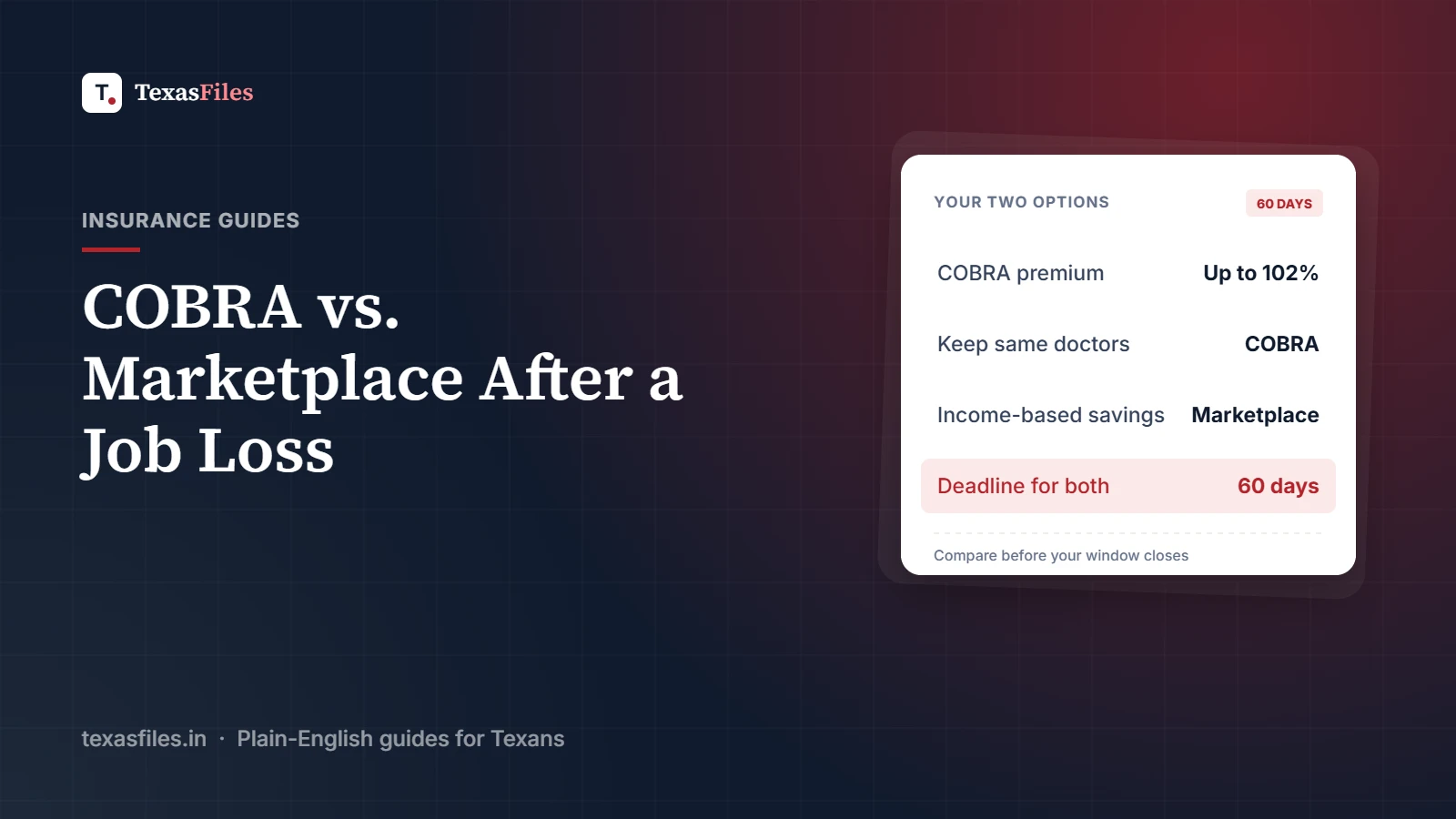
COBRA vs. Marketplace Insurance After a Job Loss in Texas
Lost your job? Compare COBRA and a HealthCare.gov Marketplace plan: costs, deadlines, networks and when each option makes sense for Texans.
·4 min read