RPM Billing Guidelines for Medicare and Commercial Insurance
Remote Patient Monitoring billing explained: CPT codes 99453, 99454, 99457 and 99458, Medicare rules, commercial payer differences, documentation and common denials.
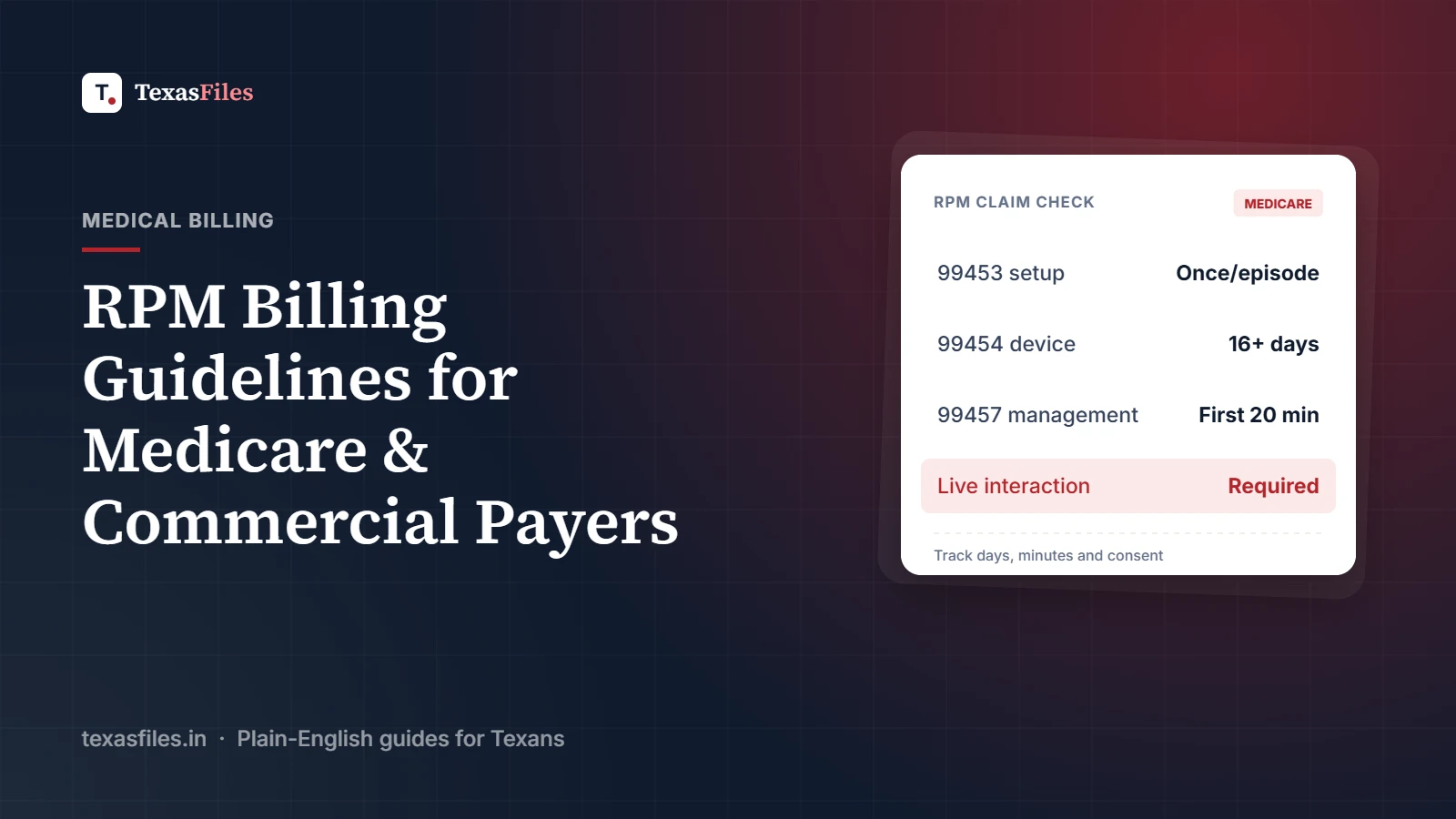
Remote Patient Monitoring (RPM) has become one of the fastest-growing services in outpatient care, and one of the most frequently denied. Practices monitoring blood pressure, glucose, weight, or oxygen levels between visits can be paid well for the work, but only if every claim meets Medicare's specific requirements or the commercial payer's policy. Missing a single element, such as the 16-day data rule or documentation of an interactive conversation, can lead to a denial or an overpayment finding in an audit.
This guide covers the RPM CPT codes, Medicare's billing rules, how commercial payers differ, documentation essentials, and the most common reasons RPM claims are denied.
What Is Remote Patient Monitoring?
RPM is the use of a connected medical device to collect a patient's physiologic data, such as blood pressure, heart rate, weight, blood glucose, or oxygen saturation, and send it electronically to a provider who reviews it and manages the patient's treatment. It's most often used for chronic conditions like hypertension, diabetes, heart failure, and COPD, but Medicare allows RPM for both chronic and acute conditions.
RPM is different from Remote Therapeutic Monitoring (RTM), which tracks non-physiologic data such as musculoskeletal status, therapy adherence, or respiratory therapy response, and uses a separate set of codes.
The Core RPM CPT Codes
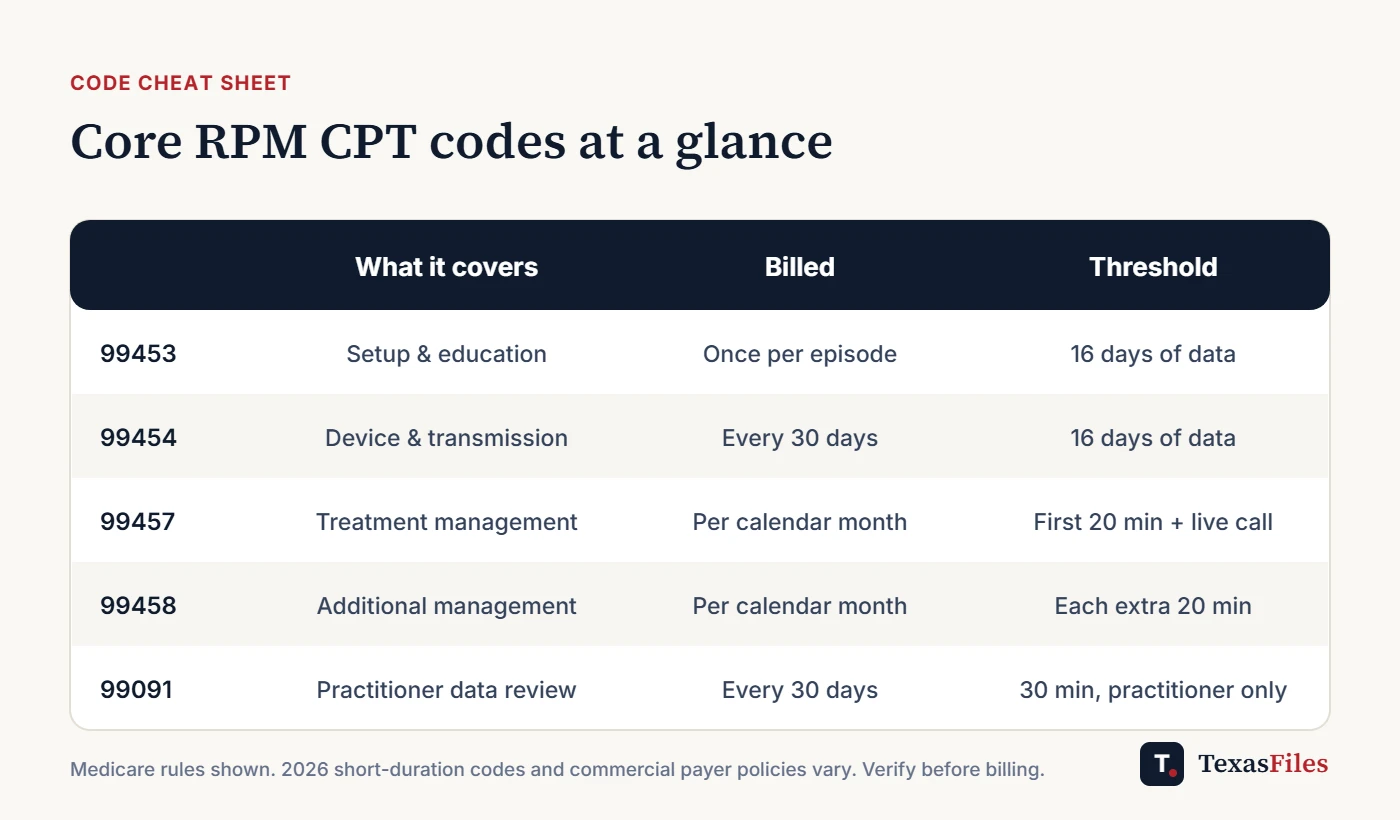
99453: Initial setup and patient education on the device. Billed once per episode of care, and only after at least 16 days of monitoring data have been collected.
99454: Device supply with daily recordings or programmed alerts, billed once per 30-day period when at least 16 days of data are collected.
99457: The first 20 minutes of RPM treatment management services in a calendar month, which must include at least one real-time, interactive communication with the patient or caregiver.
99458: Each additional 20 minutes of treatment management in the same calendar month. It's an add-on code billed with 99457.
99091: Collection and interpretation of physiologic data, requiring at least 30 minutes of the billing practitioner's own time in a 30-day period. It can't be performed by clinical staff.
For 2026, CPT and Medicare added codes for shorter monitoring periods: a device supply code for 2 to 15 days of data in a 30-day period, and a treatment management code for the first 10 minutes in a month. These help practices bill for patients who don't reach the traditional 16-day or 20-minute thresholds. Confirm current code numbers, descriptors, and payer adoption before billing them, since commercial payers may not recognize new codes right away.
Medicare RPM Billing Guidelines
1. Established patient relationship
RPM should be ordered for an established patient by a physician or other qualified health care professional who has an existing relationship with the patient. Starting RPM often happens at or after a face-to-face or qualifying telehealth visit.
2. Patient consent
Obtain and document the patient's consent before starting RPM. The consent should explain the service and that cost-sharing, such as the Part B deductible and 20% coinsurance, may apply. Consent can be verbal if documented in the record.
3. A qualifying medical device
The device must meet the FDA's definition of a medical device. It must automatically collect and electronically transmit the data. Readings the patient types in or reports by phone don't count as RPM data.
4. The 16-day data requirement
For 99453 and 99454, at least 16 days of data must be collected in a 30-day period. If a patient only transmits 12 days of readings, the traditional device supply code can't be billed for that period. Track transmission days carefully and use the newer short-duration code where appropriate and accepted.
5. One practitioner per period
Only one practitioner can bill 99453 and 99454 for a patient in a given 30-day period, even if multiple devices are used. Coordinate with other practices, especially for patients who see multiple specialists.
6. Treatment management time and interactive communication
For 99457 and 99458, time is counted per calendar month and includes time spent reviewing data, adjusting the care plan, and communicating with the patient. At least one real-time, interactive communication, such as a live audio or video conversation, is required for 99457. Text messages alone don't meet this requirement.
7. Who can perform the services
Clinical staff, such as nurses or medical assistants, can provide 99457 and 99458 services under the billing practitioner's general supervision. 99091 must be performed by the physician or qualified health care professional.
8. Concurrent services
RPM can be billed in the same period as Chronic Care Management (CCM), Principal Care Management (PCM), Transitional Care Management (TCM), and Behavioral Health Integration, as long as time is not counted twice. RPM and RTM can't be billed for the same patient in the same period.
9. Cost-sharing
Medicare Part B deductible and coinsurance apply to RPM. Explain this to patients at consent to avoid billing complaints later.
10. FQHCs and RHCs
Federally Qualified Health Centers and Rural Health Clinics have their own billing rules for RPM and care management services. Check the current Medicare guidance for your facility type.
Commercial Insurance RPM Guidelines
Commercial payers and Medicare Advantage plans often follow CPT definitions but add their own requirements. Policies differ by payer and by plan, so always check the specific medical or reimbursement policy. Common differences include:
Covered conditions: Some payers cover RPM only for specific diagnoses, such as hypertension, diabetes, heart failure, or COPD, or only for high-risk patients.
Prior authorization: Some plans require prior authorization or a documented medical necessity review before monitoring starts.
Device requirements: Some payers require specific device types, or don't cover consumer wearables.
Frequency and duration limits: Some limit how many months of RPM they'll cover, or require periodic reassessment.
New codes: Short-duration and 10-minute codes may not be covered until a payer updates its policy.
Place of service and modifiers: Requirements can differ from Medicare's. Check the payer's billing guide.
Medicaid: State Medicaid programs, including Texas Medicaid, set their own RPM rules, including eligibility criteria, device requirements, and prior authorization.
Before enrolling commercially insured patients, verify RPM benefits and patient cost-sharing during eligibility checks, and save the payer's policy version in your records.
Documentation Checklist
Order for RPM and the medical reason it's needed
Documented patient consent, including cost-sharing disclosure
Device type and confirmation it meets FDA medical device requirements
Date of setup and patient education (for 99453)
Daily transmission log showing the number of days with data in each 30-day period
Time log for treatment management, including staff name, date, minutes, and activity
Notes on each interactive communication, including date, method, who participated, and what was discussed
Care plan changes made based on the data
Supervising practitioner name for services provided by clinical staff
Common Reasons RPM Claims Are Denied
Fewer than 16 days of data billed with the traditional device code
Billing 99454 more than once in a 30-day period, or by more than one practitioner
Billing 99453 more than once for the same episode of care
No documented interactive communication for 99457
99458 billed without 99457, or time thresholds not met
Billing RPM and RTM in the same period
Missing consent or a missing order
Patient-reported data instead of automatically transmitted readings
Payer-specific requirements not met, such as diagnosis restrictions or prior authorization
Duplicate time counted toward both RPM and CCM
When an RPM claim is denied, review the remark codes on the remittance, correct the issue, and resubmit or appeal. For more on handling denials, see our guide to appealing a denied claim, and for code basics, read CPT and ICD-10 codes explained. For a broader playbook billing teams can apply across every payer, see these proven strategies to reduce claim denials.
Best Practices for a Clean RPM Program
Automate tracking: Use an RPM platform that logs transmission days and staff time automatically.
Run monthly audits: Before billing, check each patient's days of data, minutes, and interactive communication.
Bill on the right cycle: Device codes follow 30-day periods; management codes follow calendar months.
Verify benefits: Confirm RPM coverage for every commercial and Medicare Advantage patient before enrolling them.
Train staff: Make sure everyone knows what counts as interactive communication and how to document time.
Stay current: RPM rules change through the Medicare Physician Fee Schedule each year, and commercial payers update their policies regularly.
Frequently Asked Questions
Can RPM be billed for new patients?
Medicare expects RPM to be furnished to established patients. Start RPM after a qualifying visit establishes the relationship.
Does a text message count as interactive communication?
No. Medicare requires real-time interactive communication, such as a live audio or video conversation, for 99457.
Can two practices bill RPM for the same patient?
Only one practitioner can bill the device codes for a patient in a 30-day period. Coordinate care to avoid duplicate billing.
Can RPM be billed with CCM?
Yes, in the same month, as long as the time isn't counted toward both services.
Do commercial insurers pay for RPM?
Many do, but coverage and requirements vary. Check each payer's medical policy and verify benefits before enrolling patients.
The Bottom Line
RPM can be a valuable service for patients and a sustainable revenue stream for practices, but it's built on detailed rules. Track transmission days and minutes carefully, document consent and interactive communication, follow payer-specific policies, and audit monthly before billing. A disciplined process is the best protection against denials and audits.
Keep reading
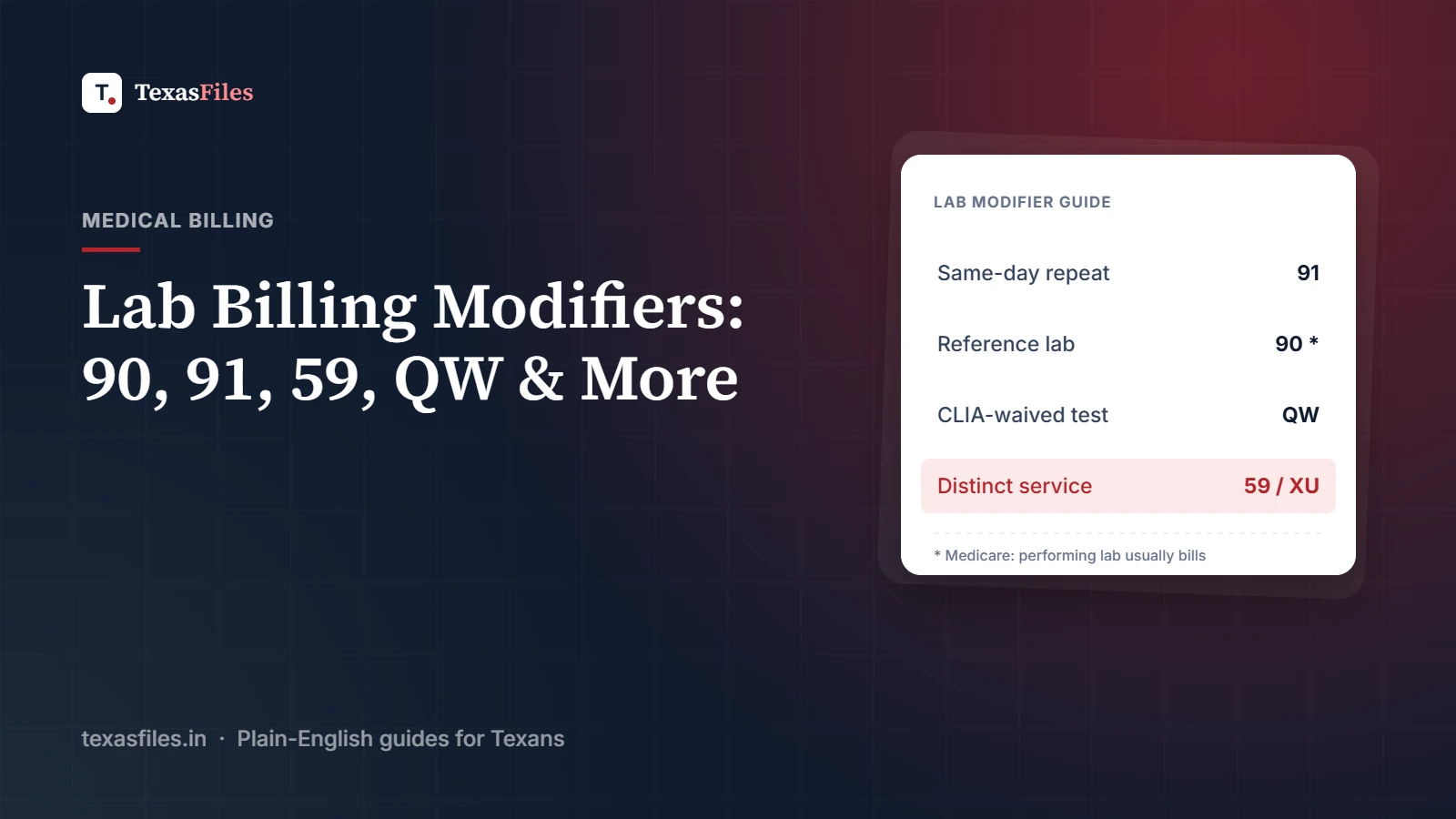
Lab Billing Modifiers Explained: 90, 91, 59, QW, and More
When to use lab modifiers 91, 90, QW, 59 and the X modifiers, 26 and TC, and ABN modifiers, plus the common mistakes that cause duplicate and bundling denials.
·4 min read
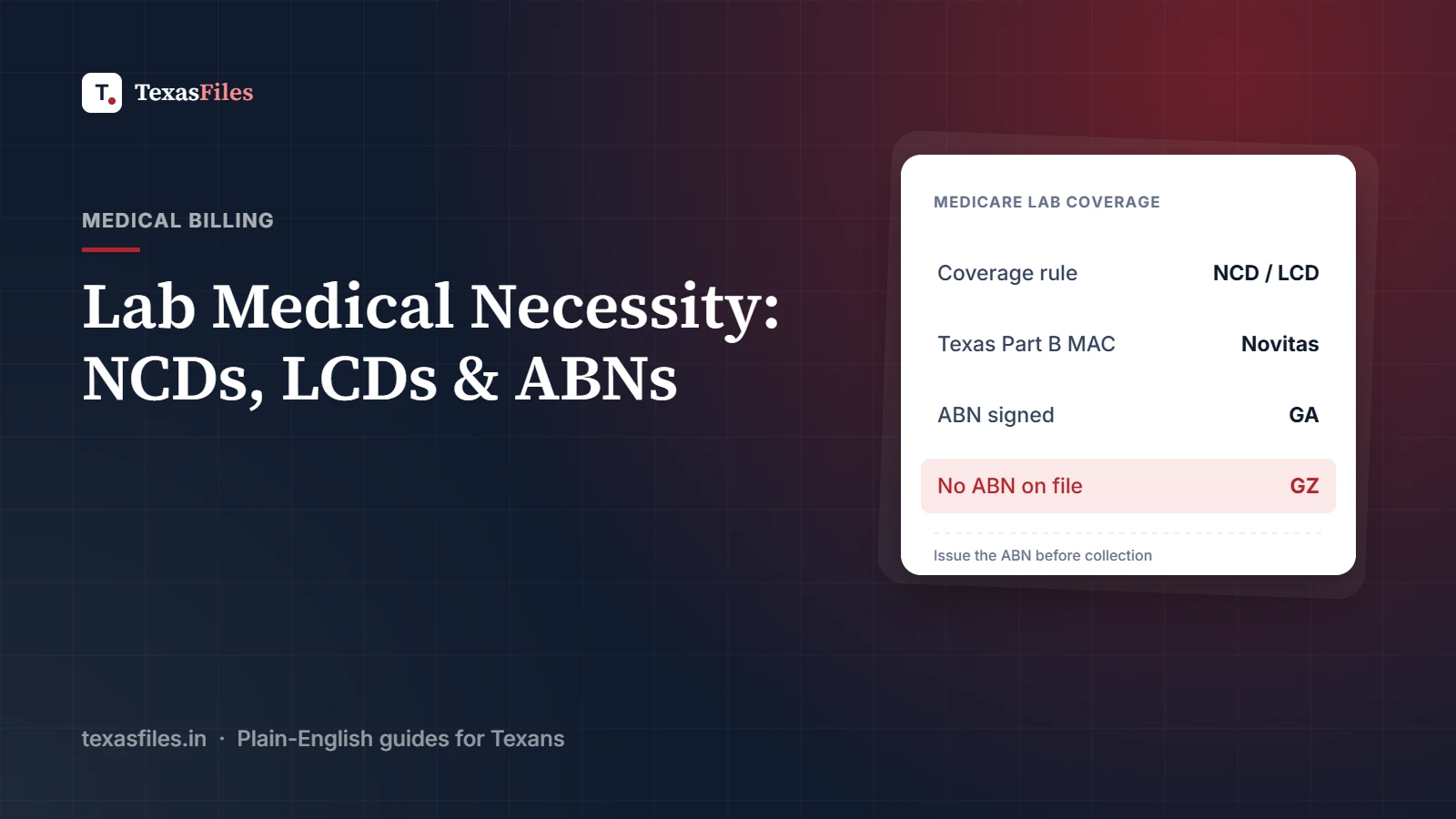
Lab Medical Necessity: NCDs, LCDs, and ABNs Explained
How Medicare decides if a lab test is covered: lab NCDs, Novitas LCDs, frequency limits, and when to use an ABN with modifiers GA, GZ, GX and GY.
·5 min read
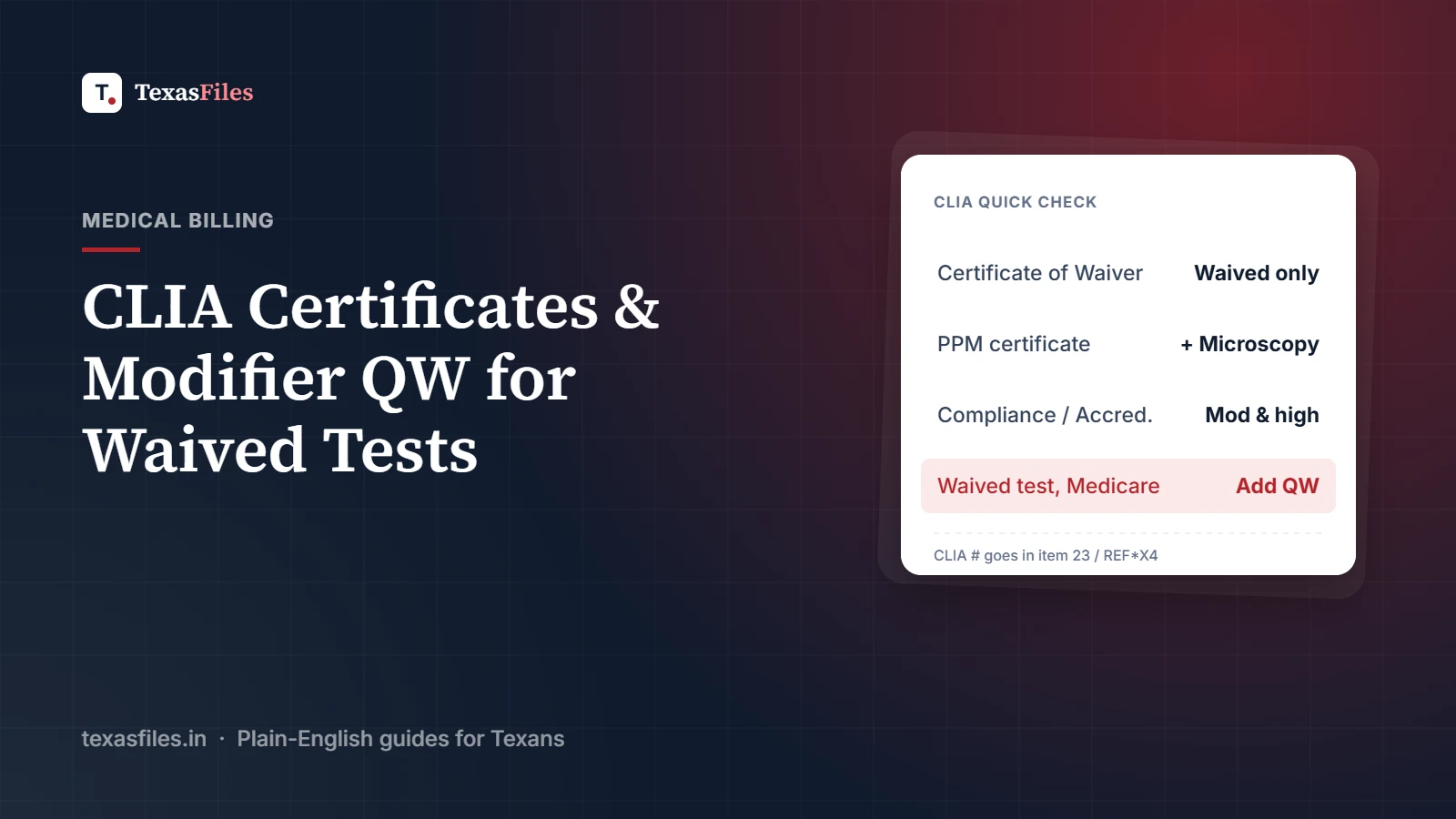
CLIA Certificates and Modifier QW: Billing Waived Lab Tests
CLIA certificate types, where the CLIA number goes on the CMS-1500 and 837P, and when Medicare requires modifier QW for waived lab tests.
·4 min read