Top Private Health Insurance Options in Texas
A plain-English look at private health insurance in Texas: coverage types, carriers you'll see, and how to compare networks, drug lists and total cost.

Texas has a large and changing private health insurance market. Depending on where you live, you may be choosing among a handful of carriers or more than a dozen, each with several plans at different price points. That variety is useful, but it also makes it hard to know where to start.
This guide explains the main private insurance options available to Texans, introduces carriers you are likely to see, and shows how to compare them on the things that matter once you start using your coverage: networks, drug lists, total cost, and how claims get handled. If you want a step-by-step method for picking a specific plan, see our companion article, how to choose a health insurance plan.
What counts as private health insurance
"Private" insurance simply means coverage sold by an insurance company rather than a government program such as Medicaid or traditional Medicare. In Texas, private coverage usually comes from one of these sources:
- Employer-sponsored plans: coverage offered through your job or a family member's job. The employer chooses the carrier and plan options and typically pays part of the premium.
- Marketplace (ACA) plans: individual and family plans bought through HealthCare.gov, the marketplace Texas uses. These are the only individual plans that qualify for premium tax credits.
- Off-exchange individual plans: ACA-compliant plans bought directly from an insurer or broker. They follow the same benefit rules but do not come with premium tax credits.
- Short-term health plans: temporary coverage that does not have to follow ACA rules and may exclude pre-existing conditions and many benefits.
You may also see health care sharing ministries advertised. These are not insurance, and they are not required to pay claims. Read their terms carefully before treating one as a replacement for coverage.
Carriers you are likely to see in Texas
The companies below commonly offer coverage in Texas in one form or another. This is not a ranking, and inclusion here does not mean a carrier offers plans in your county or will be the right fit. Plan availability changes by county and by year, so always confirm current options on HealthCare.gov, through your employer, or with the insurer.
- Blue Cross and Blue Shield of Texas: a long-standing Texas carrier that offers employer, individual, and Medicare plans. Its individual plans come in several network types, and the network attached to your specific plan matters more than the brand.
- UnitedHealthcare: widely seen in employer coverage and Medicare Advantage, and has offered individual plans in parts of Texas.
- Aetna: commonly found through employers and in Medicare plans.
- Cigna: offers employer coverage and has offered individual plans in some Texas markets.
- Oscar: sells individual Marketplace plans, mostly in and around larger metro areas.
- Ambetter from Superior HealthPlan: sells Marketplace plans in many Texas counties. Superior HealthPlan is also a Texas Medicaid and CHIP managed care plan.
Depending on your area, you may also see regional or health-system-affiliated plans. These sometimes offer narrower networks built around a particular hospital system, which can work well if that system is where you already get care.
How to compare carriers and plans
Network: are your doctors and hospitals in it?
The same carrier can sell plans with very different networks. Before enrolling, look up each doctor, hospital, and urgent care you use in the provider directory for the exact plan name, not just the carrier. Then call your doctor's office and ask whether they are in network for that specific plan. In billing offices, we regularly see patients who assumed they were covered because the office "takes Blue Cross" or "takes UnitedHealthcare," only to learn the office was not in their plan's network.
Drug list: are your medications covered?
Every plan has a formulary, the list of drugs it covers and the tier each one sits on. Check every prescription you take, note the tier, and look for flags such as prior authorization or step therapy. A plan with a lower premium can end up costing more if a regular medication is on a high tier or not covered.
Total cost: premium plus what you pay when you use care
Compare the yearly premium together with the deductible, copays, coinsurance, and out-of-pocket maximum. The out-of-pocket maximum is the most you would pay for covered in-network care in a plan year, so it tells you your worst-case exposure.
Service and claims handling
Look at how easy it is to reach member services, whether the member portal shows claims and EOBs clearly, and how the plan handles prior authorizations. Ask friends, your doctor's office staff, or your employer's benefits team about their experiences with the carrier in your area.
Billing-office tips once you are enrolled
Choosing a plan is only half the job. A few habits can prevent most surprise bills:
- Bring your current card to every visit so the office bills the right plan and member ID, especially in a new plan year.
- Ask about prior authorization before scheduled imaging, surgery, or specialty drugs. If it is required and not obtained, the claim can be denied.
- Read every Explanation of Benefits (EOB). It shows what the provider billed, what the plan allowed, what it paid, and what you owe. Do not pay a bill until it matches your EOB.
- Know your surprise billing protections. Texas and federal law limit certain out-of-network bills, such as many emergency services and some care at in-network facilities. Our Texas SB 1264 surprise billing guide explains how this works.
- Appeal denials in writing and keep copies. Your denial letter will list the deadline and the steps.
When you can enroll
Employer plans have their own annual enrollment window, set by the employer. For Marketplace plans, Open Enrollment has generally run from November 1 to January 15, and enrolling by December 15 is the usual way to get coverage that starts January 1. Federal rules on these dates have been changing, so check HealthCare.gov for the current year. Outside Open Enrollment, you generally need a qualifying life event, such as losing other coverage, moving, or having a baby. See our guide to special enrollment periods for details.
Frequently asked questions
Which private health insurance company is best in Texas?
It depends on where you live, which doctors you use, what medications you take, and your budget. A carrier that works well in one county may have a limited network in another. Compare specific plans side by side rather than relying on a brand name.
Can I get help paying for a private plan?
If you buy a plan through HealthCare.gov, you may qualify for a premium tax credit based on your household income and size. If you are offered affordable employer coverage, you generally will not qualify. Use the estimate on HealthCare.gov for current-year amounts.
Are short-term plans a good substitute?
They can fill a brief gap, but they may exclude pre-existing conditions, maternity care, prescription drugs, and other benefits. Read the exclusions before you buy.
What if I can't afford private insurance?
Check whether you or your children qualify for Texas Medicaid or CHIP through Texas Health and Human Services. Children may qualify even when adults in the household do not.
This article is general information, not insurance advice; confirm plan details, networks, and costs directly with the insurer or HealthCare.gov.
Written by Ashim
Ashim works in US medical billing and revenue cycle management, handling claim follow-up, denials and appeals every day.
Read our editorial policy. Spotted something outdated? Tell us.
Keep reading
How to Work UnitedHealthcare Claims: Status, Reconsiderations, and Appeals
How to check UHC claim status, choose between corrected claims and reconsiderations, file appeals within 12 months, and fix common denials.
·4 min read
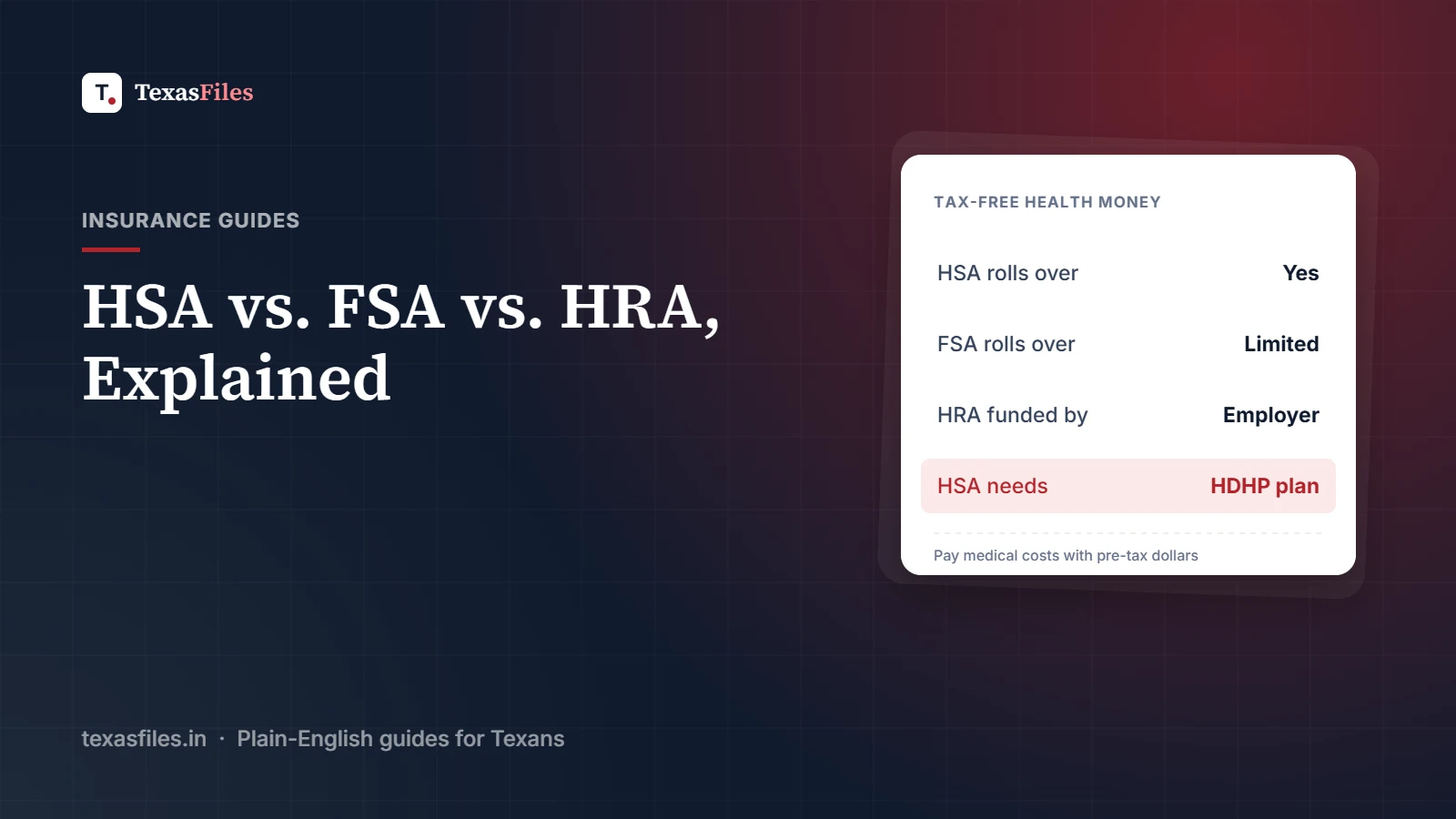
HRA vs. HSA vs. FSA: Health Accounts Explained
HRA vs. HSA vs. FSA explained: who owns each account, who contributes, rollover and job-change rules, HRA types like ICHRA, and which one is best for you.
·6 min read
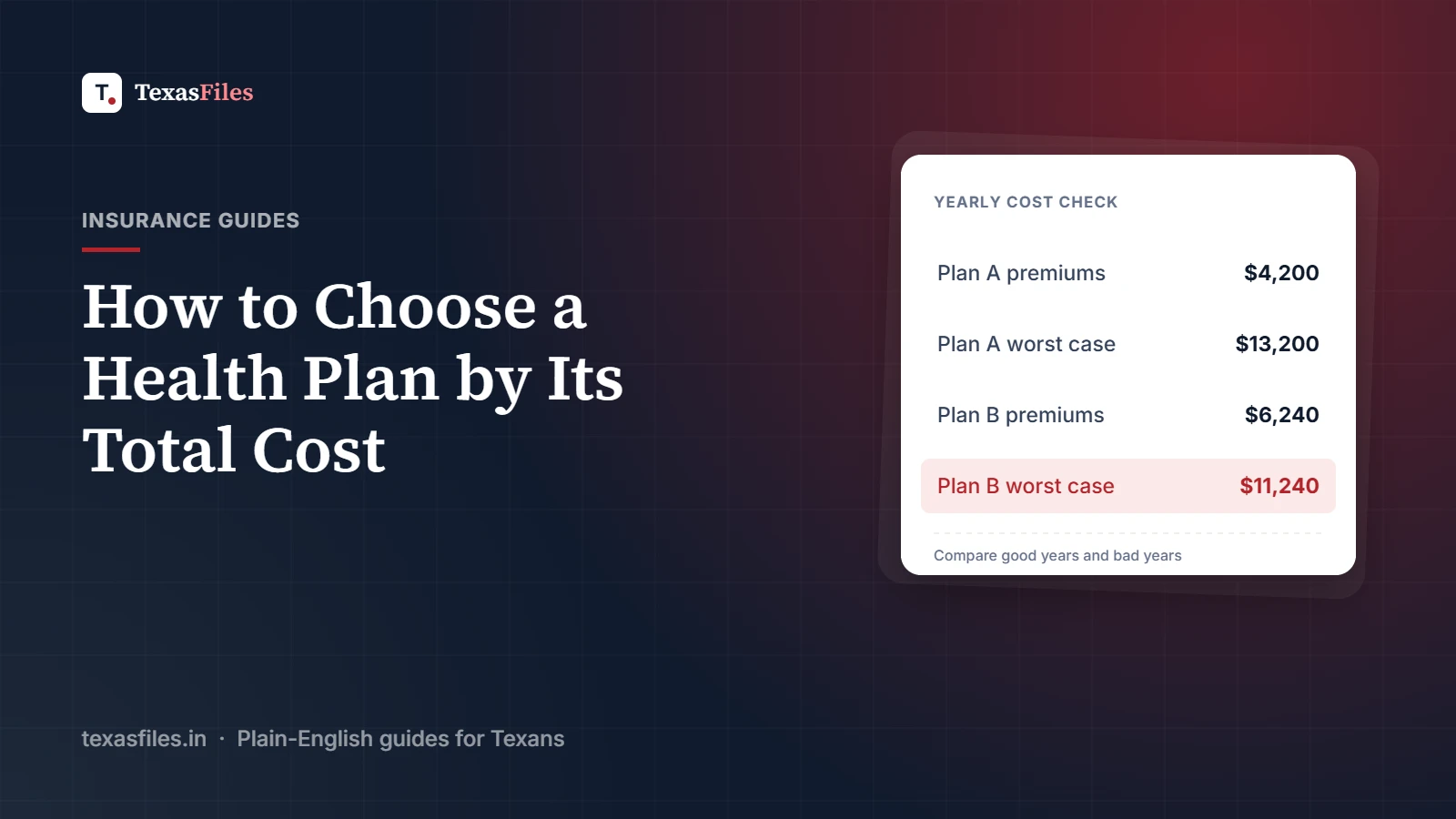
How to Choose a Health Insurance Plan: Compare the Total Cost, Not the Premium
The cheapest premium isn't always the cheapest plan. Learn how to compare health plans by total yearly cost, networks and drug coverage.
·3 min read