Navigating the Texas Emergency Room Out of Network Trap
An in-network ER can still mean out-of-network doctors. Learn your rights under Texas and federal law, and what to do if a surprise ER bill arrives.
In an emergency, no one has time to check insurance directories. You go to the nearest emergency room and focus on getting care. The problem is that the hospital may be in your network while some of the doctors who treat you are not. In the past, that gap led to large, unexpected bills. Today, Texas and federal laws protect most insured patients from these surprise bills for emergency care. This guide explains how the out-of-network problem happens, what your rights are, and what to do if a bill arrives that does not look right.
How the out-of-network problem happens
A hospital and the doctors who work there often bill separately. The emergency physician, radiologist, anesthesiologist, or pathologist may belong to an independent group with its own insurance contracts. So you can visit an in-network hospital and still be treated by an out-of-network doctor.
Before surprise billing laws, an out-of-network doctor could bill you for the difference between their full charge and what your insurer paid. This is called balance billing. It often happened in emergencies, when you had no chance to choose.
Freestanding emergency rooms
Texas has many freestanding emergency rooms. These are licensed emergency facilities that are not attached to a hospital. They can look like urgent care clinics, but they are not the same. Freestanding ERs bill as emergency rooms, and their charges can be much higher than an urgent care visit. Both Texas law and federal law treat them as emergency facilities for surprise billing protections.
Urgent care is different
An urgent care center is generally not an emergency room. Before a non-emergency visit, check whether the urgent care clinic is in your network. Surprise billing protections for emergencies generally do not apply to a regular urgent care visit.
Your rights during an emergency
You must be screened and stabilized
A federal law called the Emergency Medical Treatment and Labor Act (EMTALA) requires hospitals with emergency departments that take part in Medicare to screen anyone who comes in with an emergency and to stabilize them, regardless of insurance or ability to pay. The hospital can bill you later, but it cannot refuse emergency care because of your coverage.
Your plan must cover the emergency
Most health plans must cover emergency care without prior authorization, and must treat it at in-network cost-sharing even if the facility is out of network. Coverage is based on your symptoms, not just the final diagnosis. If you had symptoms that a reasonable person would see as an emergency, such as chest pain, the visit should be covered as an emergency even if it turned out to be something minor.
You are protected from balance bills
Which law protects you depends on your plan:
- State-regulated plans (often marked "TDI" or "DOI" on your card) are covered by Texas Senate Bill 1264, in effect since January 1, 2020. Read our full SB 1264 guide for details.
- Most other private plans, including self-funded employer plans regulated by the U.S. Department of Labor, are covered by the federal No Surprises Act, in effect since January 1, 2022.
Under both laws, for emergency care you generally pay only your in-network copay, coinsurance, and deductible. The out-of-network provider and your insurer settle the rest between themselves.
What the laws do not cover
- Ground ambulance. The No Surprises Act covers air ambulance but not ground ambulance. Ambulance rules for Texas state-regulated plans are separate and have changed in recent years. If you get a ground ambulance bill, ask your plan or TDI which rules apply.
- Care after you are stable, in some cases. Once you are stable, a provider may ask you to sign a notice agreeing to out-of-network charges for further care. You do not have to sign. You can ask to be transferred to an in-network facility.
- Medicare and Medicaid. These programs have their own billing protections.
Step-by-step: what to do after an ER visit
- Wait for your Explanation of Benefits (EOB). Your insurer sends one for each claim. It shows what was billed, what the plan paid, and what you owe. There may be separate EOBs for the facility and each doctor.
- Match each bill to its EOB. Check the date of service, the provider name, and the "patient responsibility" amount.
- Look for a gap. If a provider is billing you more than the EOB says you owe for emergency care, that is a sign of a possible balance bill.
- Call your insurer. Ask: "Was this claim processed as emergency care under SB 1264 or the No Surprises Act? What is my correct patient responsibility?" Write down the representative's name and a reference number.
- Call the provider's billing office. Explain that the care was an emergency, give them your EOB amount, and ask them to adjust the balance. Ask them to hold the account from collections while they review it.
- Request an itemized bill if needed. This helps you see each charge. See our guide on requesting an itemized medical bill.
- Pay your correct share. Paying the amount your EOB shows you owe keeps your account in good standing.
- File a complaint if it is not fixed. For state-regulated plans, contact the Texas Department of Insurance at 1-800-252-3439. For other plans, call the No Surprises Help Desk at 1-800-985-3059 or visit cms.gov/nosurprises.
When the insurer denies the ER claim
Sometimes the problem is not the provider's bill but the insurer's decision. An ER claim may be denied because the plan decided it was not an emergency, or because of a missing referral or authorization. From the billing office side, these denials can often be fixed.
- Read the denial reason on the EOB. Ask the insurer to explain it in plain terms.
- If the plan says the visit was not an emergency, ask your doctor's office for the ER records showing your symptoms when you arrived.
- File an internal appeal with the insurer by the deadline listed on the denial notice. Include a short letter describing your symptoms and why you went to the ER.
- If the internal appeal is denied, you may have the right to an external review by an independent reviewer. The denial letter should explain how.
How to prepare before an emergency
- Know which nearby hospitals are in your network. Save that information on your phone.
- Know the difference between an urgent care clinic and a freestanding ER in your area.
- Keep a photo of the front and back of your insurance card.
- Check whether your card says "TDI" or "DOI" so you know which law applies.
- If you are shopping for coverage, compare networks closely. Our guide to private health insurance options in Texas can help.
In a true emergency, go to the nearest emergency room or call 911. Do not delay care to check your network.
Frequently asked questions
Will I owe anything for an out-of-network ER visit?
Usually you still owe your normal in-network cost-sharing, such as a copay, coinsurance, or deductible. What you should not receive, if your plan is protected, is a bill for the rest of the out-of-network provider's charges.
What if I went to the ER and it was not a real emergency?
Plans generally must judge emergency coverage by your symptoms, not the final diagnosis. If your symptoms would reasonably seem like an emergency, the visit should be covered that way. If the claim is denied, you can appeal.
Does this apply if I am uninsured?
The balance billing protections apply to insured patients. If you are uninsured, the hospital still must screen and stabilize you. Ask about financial assistance and self-pay discounts. For scheduled care, uninsured patients also have the right to a Good Faith Estimate.
Is a freestanding ER covered like a hospital ER?
For emergency care, yes. Both Texas law and the No Surprises Act treat freestanding emergency rooms as emergency facilities. Your cost-sharing should be at the in-network level.
This article is general information, not legal or medical advice.
Written by Ashim
Ashim works in US medical billing and revenue cycle management, handling claim follow-up, denials and appeals every day.
Read our editorial policy. Spotted something outdated? Tell us.
Keep reading
How to Work UnitedHealthcare Claims: Status, Reconsiderations, and Appeals
How to check UHC claim status, choose between corrected claims and reconsiderations, file appeals within 12 months, and fix common denials.
·4 min read
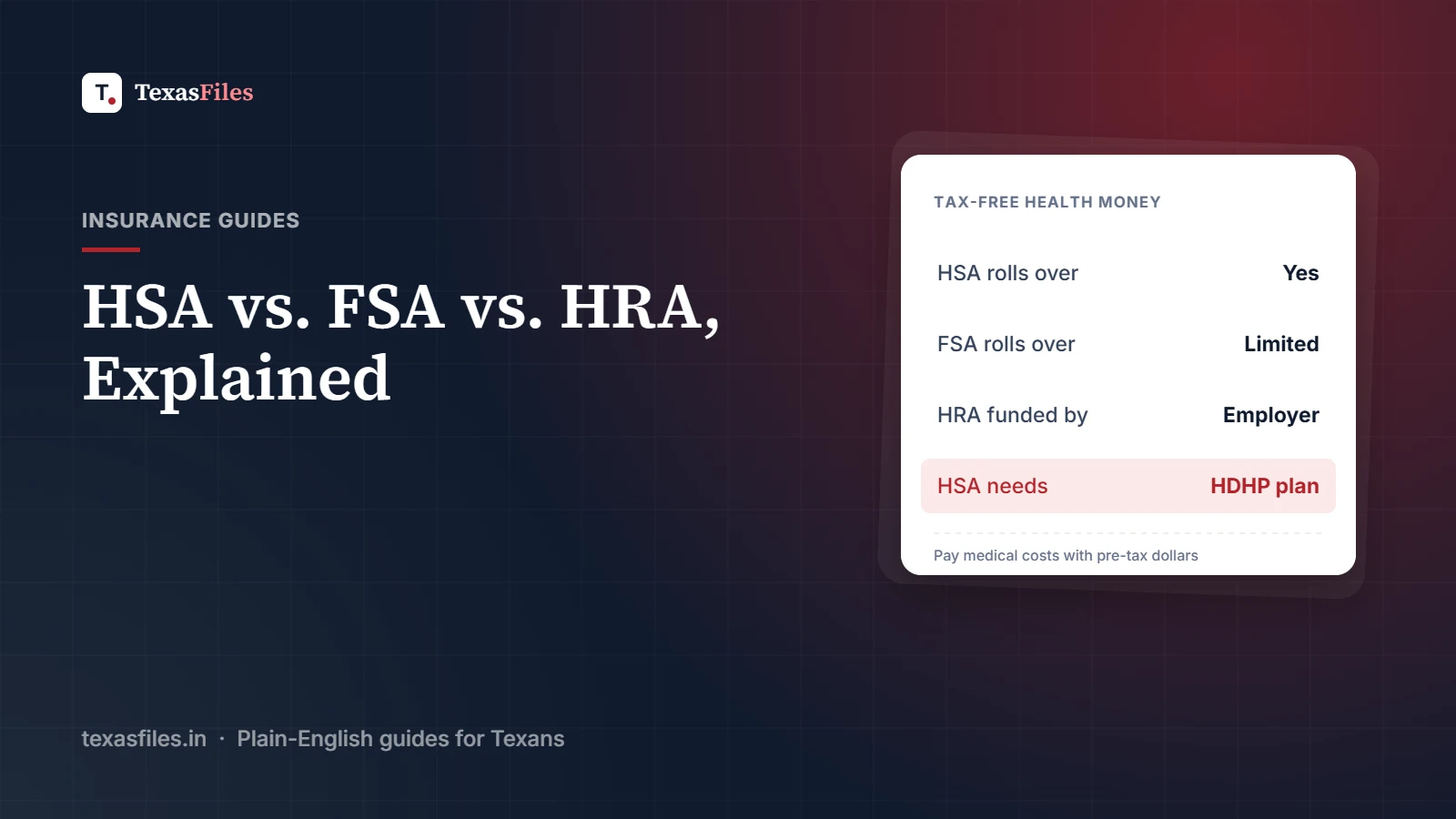
HRA vs. HSA vs. FSA: Health Accounts Explained
HRA vs. HSA vs. FSA explained: who owns each account, who contributes, rollover and job-change rules, HRA types like ICHRA, and which one is best for you.
·6 min read
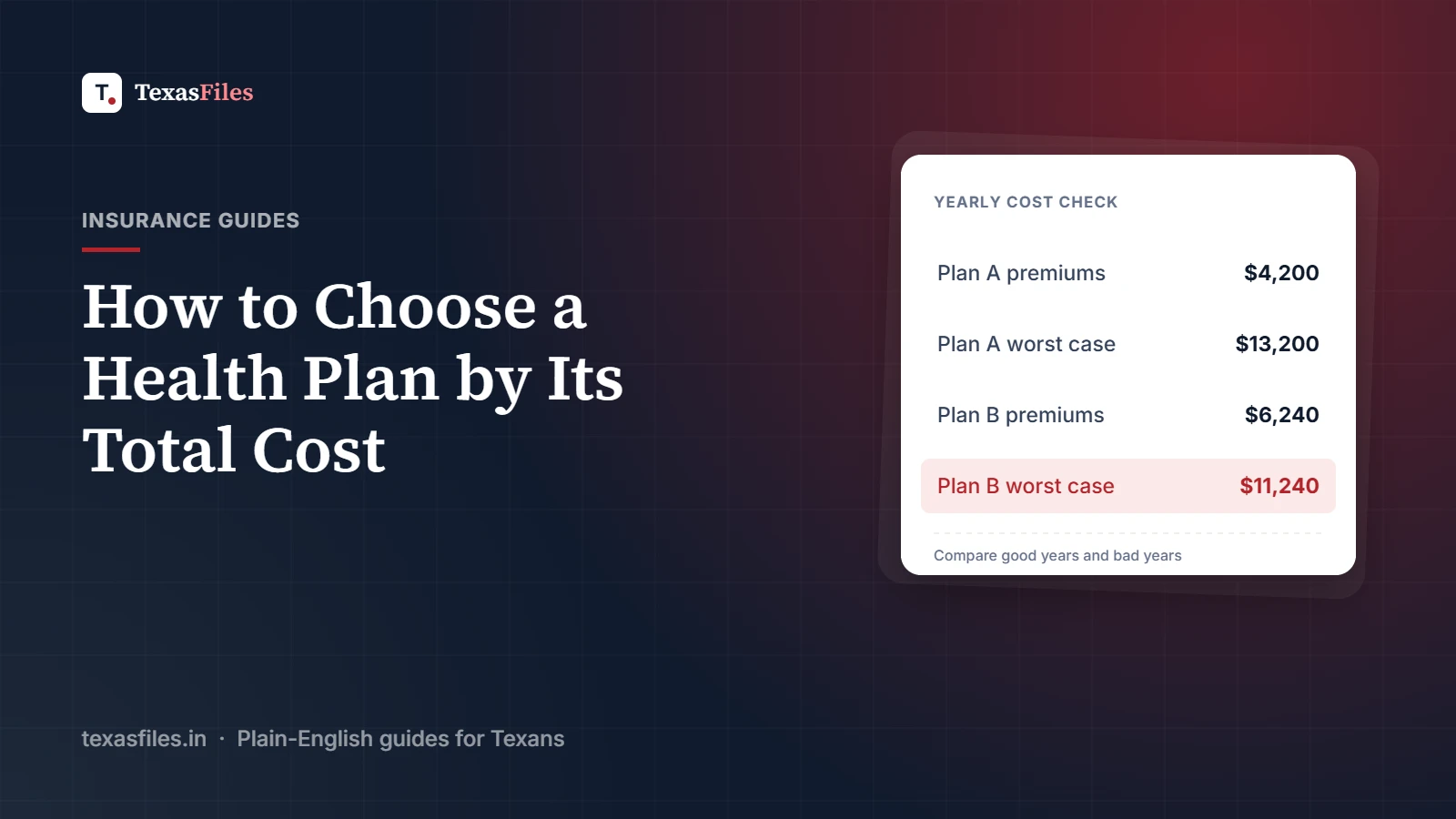
How to Choose a Health Insurance Plan: Compare the Total Cost, Not the Premium
The cheapest premium isn't always the cheapest plan. Learn how to compare health plans by total yearly cost, networks and drug coverage.
·3 min read